This unusual blackbird is attracting bird watchers to a Nottinghamshire country park. The bird is leucistic, which is a genetic mutation that prevents pigments from being deposited normally in its feathers.
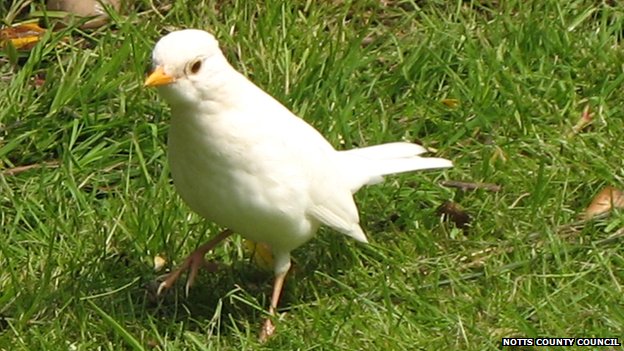
It has been residing for the last four years in the woodland of Rufford Abbey Country Park. Each year, observers say, it has steadily shed its black feathers for white feathers.
-
Leucism is often confused with the rarer condition albinism, a genetic condition that prevents the production of melanin in the body; in leucism, these colouring chemicals are present in the body, but are not deposited in feathers
-
Some colours in birds’ plumage come from other pigments such as carotenoids, so birds can be albinistic and still have some colour
-
Leucistic birds may be completely white and still have melanin in their bodies; as for this blackbird, such animals will have dark eyes and white feathers
-
Albino birds and animals also have pink eyes, as the only colour in the eyes comes from the blood vessels behind the eyes
Park rangers took this picture of the blackbird – which is now completely white with no visible pigmented feathers – in the summer of 2011. Leucistic birds are often very vulnerable to predators, because of their bright white plumage. So the park’s managers are urging birdwatchers to keep an eye out for this unusual blackbird.
Site manager John Clegg said: “This bird has been steadily turning whiter over the years and last summer it was completely white. “It has become quite a character at the park in recent years. “It tends to appear in the warmer months and we have not seen it for a few months but hope it will return here soon.”
Most leucistic birds have some spots or patches of colouration in their feathers from other pigments, so this is a particularly unusual specimen.
This article was written and published by BBC Nature Features


Leave a Reply