
More than 40 pilot whales died after a mass stranding event on New Zealand’s remote east coast, conservation officials said on Friday, despite rescue efforts by volunteers and conservation workers.
The Department of Conservation (DoC) said 43 whales had died in the mass stranding along the Ngawi coast on the south-eastern tip of the North Island.
The whales were reported to DoC just after 8am on Thursday, after which conservation staff, Maori iwi, or tribe, and volunteers tried to save them. However, “none of these whales are believed to have survived,” said Ariana Hawira, acting operations manager for DOC Wairarapa.
After the whales were first spotted trapped among the rocks, rescuers attempted to refloat some of the surviving animals, but they were largely unsuccessful.
Efforts to save the whales were hampered by the remote location, powerful surf, and sharp rocks in the intertidal zone, said Project Jonah, a group that was involved in the rescue attempts.
“When the whales were discovered, an estimated 40–50 whales were stranded along several kilometres of coastline,” Project Jonah said in a Facebook post on Friday. “Many had already died before they were found and sadly the whales that were found alive, succumbed throughout the day.”

The conservation department is working with iwi to manage the burial of whales, Hawira said. Whales are considered a taonga – a sacred treasure – by Māori.
Whale strandings are fairly common in New Zealand and more than 5,000 strandings of whales and dolphins have been recorded since 1840, according to DOC.
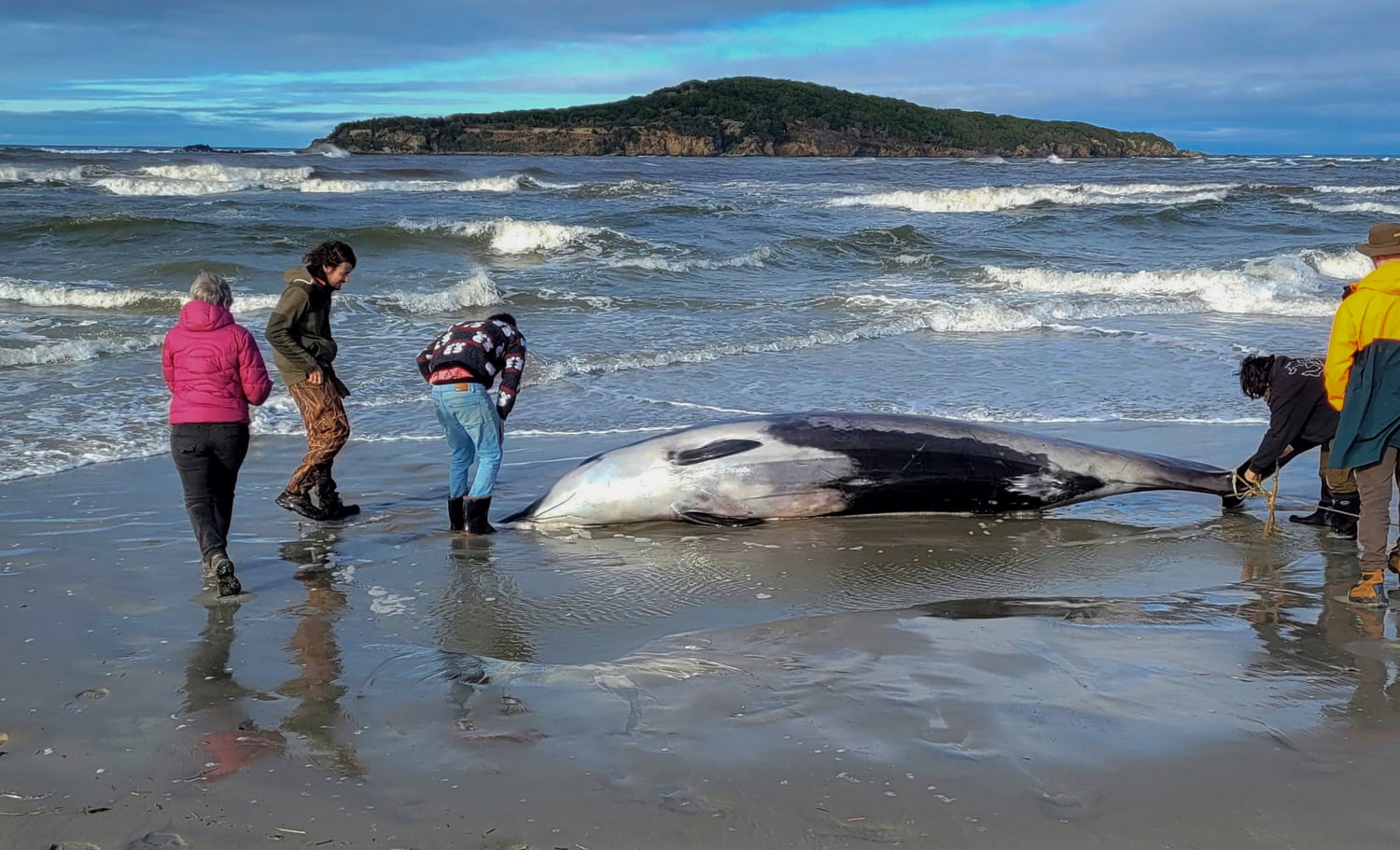
Pilot whales are a member of the dolphin family and can grow up to seven metres (23 ft) long and weigh up to 3 tonnes. The species are prolific stranders, although the behaviour is not well understood, Hawira said.
“While stranding on this part of the coastline is uncommon, there does not appear to be any indication of strandings becoming more frequent or severe,” she said.
This article by Harry Pearl was first published by The Guardian on 5 November 2026. Lead Image: Dozens of pilot whales were stranded along the Ngawi coast in New Zealand’s Wairarapa region. Photograph: Marty Melville/AFP/Getty Images.



Leave a Reply