
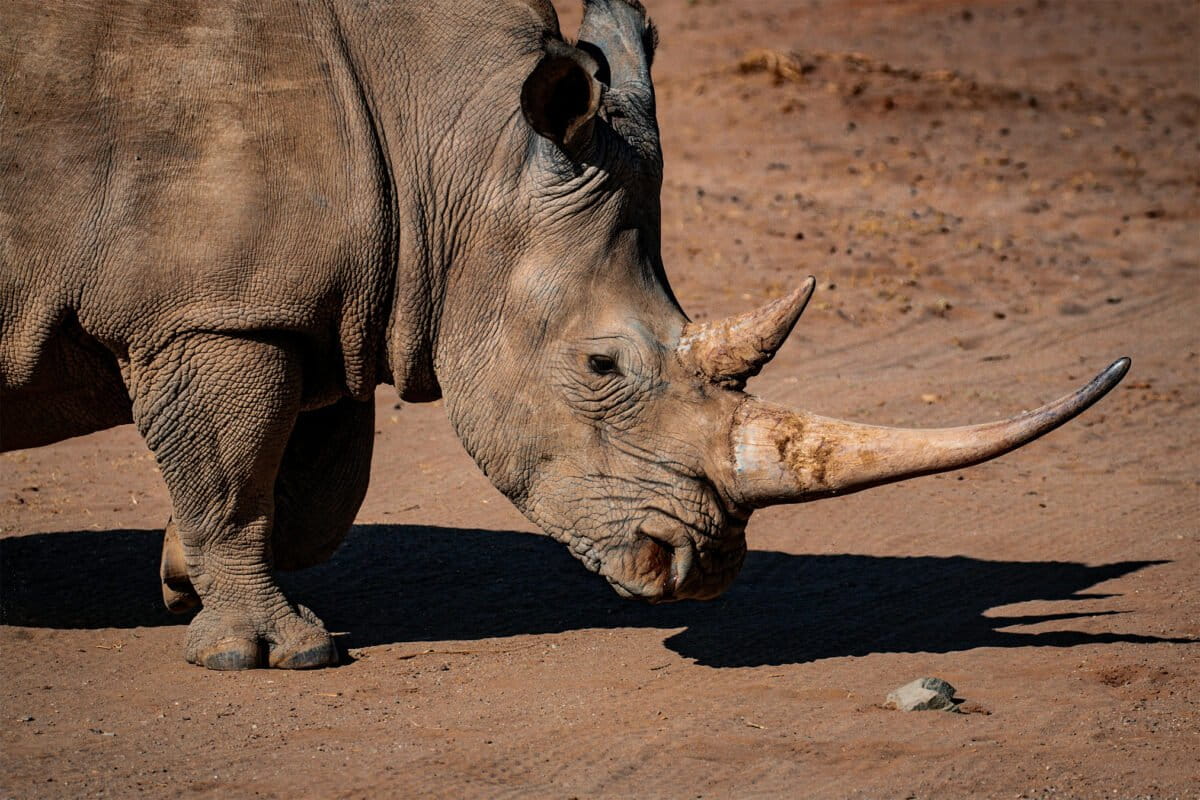
South Africa has the largest rhino population in the world, with an estimated 16,000 to 18,000 animals.
Poachers in South Africa killed more than 100 rhinos in the first three months of this year, most of them inside national parks, highlighting an ongoing battle to protect one of the best-known endangered species.
South African Environment Minister Dion George announced the figures Monday and said that of the 103 rhinos killed between 1 January and 31 March, 65 were poached in national parks.
The average of more than one rhino killed a day is in line with last year’s count and “a stark reminder of the relentless threat to our wildlife,” George said.
Who is killing South Africa’s rhinos?
South Africa has the largest rhino population in the world, with an estimated 16,000 to 18,000 animals, according to conservation groups. That includes black and white rhinos.
Black rhinos are only found in the wild in Africa and are listed as critically endangered, with around 6,400 left, according to the International Union for Conservation of Nature. Around 2,000 are in South Africa.
South African authorities have focused in recent years on criminal syndicates they believe are behind much of the country’s rhino poaching.
The environment ministry hailed a conviction last year of what it called a poaching “kingpin” from Mozambique.
Simon Ernesto Valoi was sentenced to 27 years in prison by a Mozambique court for running an operation poaching rhinos in South Africa’s huge Kruger National Park, which borders Mozambique.
This article was first published by Euronews on 6 May 2025. Lead Image: Copyright AP Photo/Denis Farrell, File.
Wildlife in catastrophic decline
The 73% decline in vertebrate wildlife populations during the last 50 years (mammals, birds, amphibians, reptiles and fish), is primarily driven by human activities that threaten biodiversity.
Habitat Loss and Degradation – human activities like deforestation, urbanization, and agriculture have led to the destruction and fragmentation of natural habitats, reducing the space and resources available for wildlife.
Pollution – air, water, and soil pollution from industrial activities, agriculture, and other sources can harm wildlife directly or indirectly by affecting their habitats and food sources.
Climate Change – changing weather patterns, rising temperatures, and sea levels are disrupting ecosystems and impacting species’ ability to adapt and survive.
Overexploitation of Resources – unsustainable hunting, fishing, and logging practices can lead to the depletion of populations and the loss of biodiversity.
Invasive Species – the introduction of non-native species can disrupt ecosystems, compete with native species, and threaten their survival.
 Donate
Help to protect wildlife by donating as little as $5. Our conservation partners spend at least 80 percent of the money raised on actual fieldwork rather than administration and fundraising.




Leave a Reply