
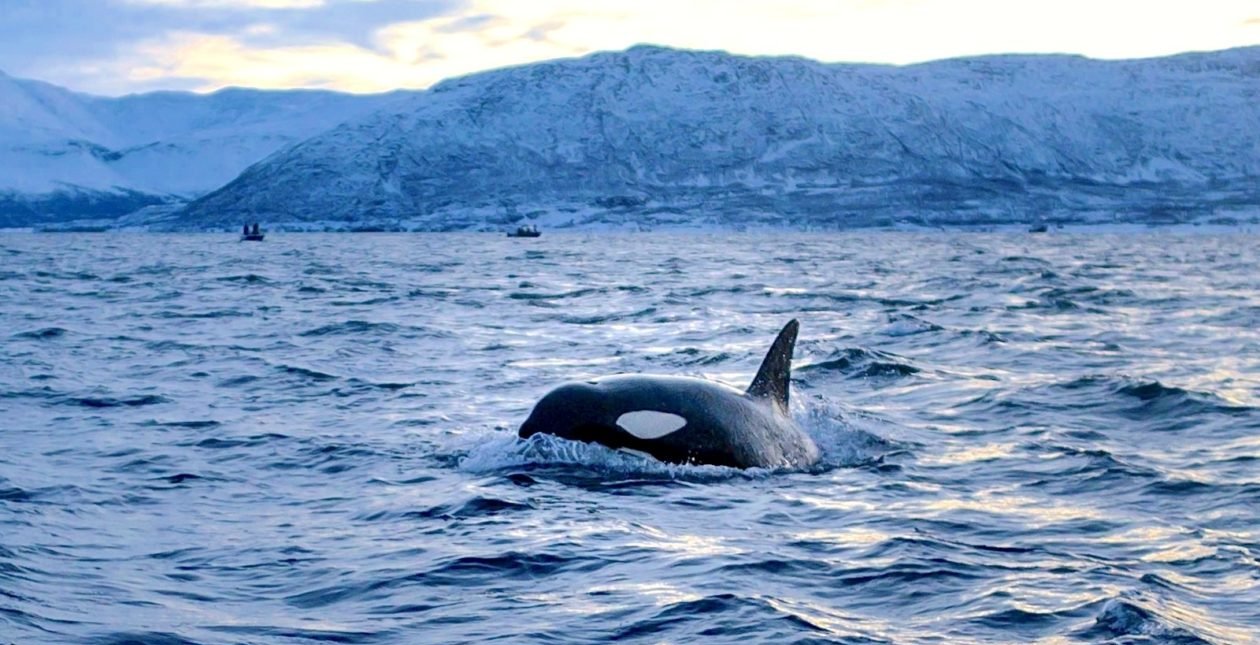
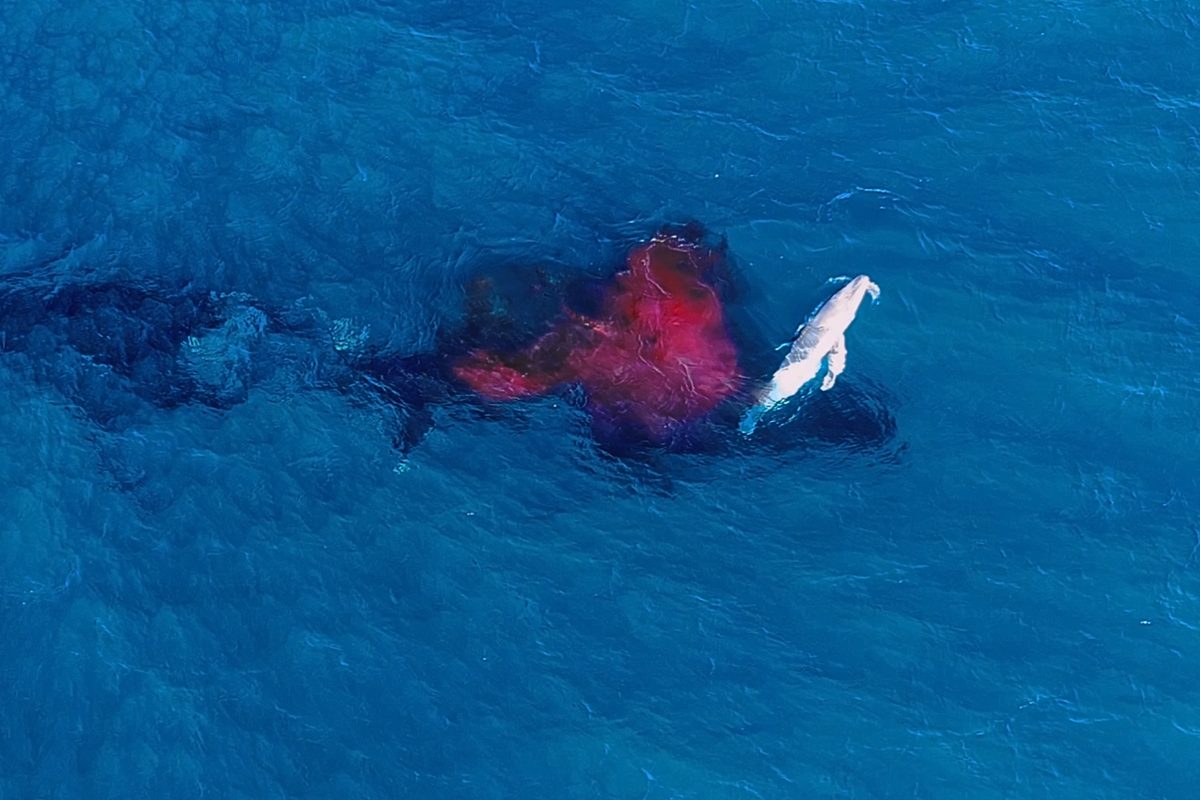
In a display of sophisticated predatory behaviour, three orcas were seen using a highly strategic hunting method to ‘kidnap’ a young humpback whale, from under its mother’s nose.
This entirely new tactic had never been seen before by scientists and was documented by a camera team for the first time for the BBC’s 2024 documentary series, Mammals, narrated by Sir David Attenborough.
The astonishing abduction was filmed off the coast of Western Australia at Nigaloo, the largest fringing coral reef on Earth, thought to be the birthing place of a rapidly growing population of humpback whales. Since the banning of commercial whaling in 1986, humpback whales have risen in number from a few hundred to more than 35,000.
Despite the setting, there’s little for the humpbacks to eat here and eventually hunger drives them to start the epic migration to Antarctica where food is abundant.
The calves have grown a little from their mother’s milk but once outside the fringing reef they are vulnerable. The brief appearance of the orcas – roughly just 40 individuals and unlike the humpbacks, their numbers here are falling – is timed to coincide with the months of humpback migration.
Enter a small pod of orcas, just three, pursuing a calf with its mother, accompanied by a 40-ton male. The escort is a challenge, but the orcas bide their time. When the male dives, perhaps thinking they’ve gone, the killers seize their chance and capture the calf at high speed, mimicking the mother’s behaviour by putting the calf on their backs and carrying it in the wake behind their fins. Young and naïve, the calf goes along.
In a nearby boat, the crew filmed the action, recording the remarkable physics of the heist using a stabilised underwater camera rig, purpose-built to film at high speed and give new insights into how the orca work together, using their mammalian intelligence and communication to overcome an adversary many times their size.
“This completely new methodology shocked the crew and underlined just how incredible mammals are; when presented with a problem they can design, communicate and execute a plan as a team,” said Mammals producer Daniel Rasmussen.
Orcas are fussy eaters and often target calves for their protein-rich tongues, leaving the rest of the carcass for scavengers, such as sharks. They sometimes kill as many as five calves a day. But such attacks are not without risks for the orcas. Some mothers fight tooth and nail, and one swing of a humpback fin could injure an orca.
This article by Debbie Graham was first published by Discover Wildlife on 9 May 2026. Lead Image: Getty Images.
Help to protect wildlife
Protect wildlife by making a monthly donation as little as $5.
It only takes a minute!




Leave a Reply