
LUNDAZI, Zambia — “It’s not possible [to coexist with elephants], because they are animals and we are human beings — they should have their own home,” says Esnart Banda, a Zambian farmer whose maize and tobacco fields lie 5 meters, just 16 feet, from the boundary of Malawi’s Kasungu National Park.
Just two thin strands of orange, plastic-coated wire now stand between Banda’s crops and Kasungu’s elephants.
The wires, known as polywire fencing and supplied by conservation group IFAW and Zambia’s Department of National Parks and Wildlife (DNPW), are strung taut between straight, evenly cut fence poles that Banda and her helpers erected. To the uninitiated, they hardly seem capable of stopping a herd of elephants. But Banda herself attests to their effectiveness.
“It’s strong, it helps us,” she tells Mongabay. “If somebody touches it, they fall.”

On a neighboring farm, within sight of the bare granite faces of Malawi’s Miwonde Hills, Harry Msimuko shows off the “power house” in his living room: two solar-powered batteries with wiring snaking up the wall. When he flicks a switch at night, pulses of electricity run along 6 kilometers (nearly 4 miles) of fencing enclosing not only his crops but those of 19 neighbors.
The only recent conflict, he says, has been with hyenas crossing from Kasungu; he’s lost goats and pigs to the carnivores, but the elephants have stayed away.
“We are protected and this [fencing] will help,” he says.
The fencing is just one of several measures IFAW and the national parks department are using to help farmers and elephants coexist in this part of eastern Zambia. Others include tracking satellite-collared herds to give farmers advance warning of their approach; erecting signs at schools and community centers advising people on how to avoid provoking elephants; and broadcasting adverts and live phone-in programs on local radio, where farmers can share their experiences of crop-raiding animals.
Eleven years ago, Malawi and Zambia signed a treaty establishing the Malawi-Zambia Transfrontier Conservation Area (TFCA), intended to allow wildlife to move freely between Kasungu and Zambia’s Lukusuzi and Luambe national parks.
To reach Lukusuzi, and its 2,720 square kilometers (1,050 square miles) of intact miombo woodland, elephants must, however, cross a narrow stretch of populated land containing farms like Banda’s. They must also cross roads and navigate past schools and homes.
They would need to move through the remaining pockets of intact forest, where they could travel without clashing with farmers or being harassed.
Such routes for elephants once existed, says Letesiya Phiri, chieftainess of Mwasemphangwe, one of seven chiefdoms in the TFCA.
“The [human] population has grown and most of those routes are now people’s fields,” she says. “To say [to those farmers], ‘Move, so that the animals can pass through’ – they will come to me asking for alternative land. I don’t have any more land for them to be given.”


Her comments highlight the obstacles facing efforts to reconnect Kasungu and Lukusuzi: even where corridors are ecologically viable, finding space for them within an increasingly crowded landscape is far more difficult.
So far, though, some of the conservation interventions do seem to be working. Farmers with fields now surrounded with protective wires have reported seeing elephant footprints circling their crops, tracing the bright orange fencing, and not breaking through.
For her part, Banda says she doesn’t plan to remain confined behind the wire. New fields will need to be cleared.
“I’ve got children, they need that land to work,” she says. She’s not the only one who feels this way.
While she says she hopes support will be available to fence future fields, continued expansion will leave fewer routes for elephants moving across the TFCA. Mongabay observed tree stumps jutting from freshly cleared tobacco fields, and woodlands being cut for fuel to cure tobacco leaves in wood-fired barns.
“They [farmers] just keep increasing their fields,” says Alstone Mwanza, IFAW’s community engagement manager. Since he started working with IFAW here last September, he says he’s already noticed the impacts. “Where once there was forest, it has now been cleared.”
Pressed further, Banda says she understands the idea of wildlife corridors — designated areas allowing elephants to pass between farms — but doubts everyone will agree.
“Myself, I can say yes, make a corridor so that they can pass by, going to Lukusuzi, and coming from Lukusuzi, going to Malawi — there will be no problem. But with my friend, we will argue.”


Sitting barefoot on the porch of her palace, within view of a low range of mountains near Lukusuzi’s eastern edge, Phiri says that even if land could be set aside, other challenges remain.
She says Lukusuzi lacks sufficient standing water to sustain elephants year-round. If water is scarce, herds will simply return to Kasungu.
Ideally, IFAW officials say, elephants that reach Lukusuzi would continue farther, into the adjoining Luambe National Park, and the Luangwa River running along its western boundary.
Despite heavy human presence, the window of opportunity to establish elephant corridors across farmland may not yet be entirely closed.
The elephants themselves have shown this.
Working on his laptop in the small town of Lundazi, in the heart of one of the TFCA’s main farming districts, IFAW’s landscape conservation program manager Henry Ndaimani pulls up satellite tracking data from last July. It shows a herd leaving Kasungu, crossing farmland into Lukusuzi, moving along the park’s eastern edge, then cutting diagonally back across farms to Kasungu.
On the EarthRanger map, green dots mark the herd’s hourly positions. Across farmland, the gaps between dots widen — indicating faster movement, perhaps 8-10 kilometers per hour, or 5-6 miles per hour.
For the elephants, Ndaimani says, farms represent “a landscape of fear.” But for people like him, working to restore landscape connectivity, the data are encouraging.
July falls outside Zambia’s main cropping season, suggesting the elephants were not raiding crops back then, but moving between habitats. Ndaimani points to green drainage lines cutting through the brown patchwork of fallow fields within the corridor.
“These are the areas that the elephants are trying to use,” he says. “But do we have enough connectivity between Kasungu and Lukusuzi? It depends on the amount of green.”

Much has changed in the 22 years since Malawi and Zambia signed the agreement establishing the TFCA, Ndaimani adds. There are now more people, and more farms. But the movement data suggest connectivity can still be achieved.
Collins Mwebela has seen this firsthand. At a shaded campsite in Kaleza, where domed green tents sit behind a grass fence, Mongabay meets him and fellow members of a rapid response unit. Theirs is one of five such mobile teams set up by IFAW to respond to elephant incursions on farms, using firecrackers or warning shots to drive the animals away.
Last year, he says, a herd that showed no signs of crop raiding crossed farmland and a main road on its way toward Lukusuzi National Park. But at dawn, people spotted the elephants and began shouting.
“That’s how they turned [back] again,” he says.
Elephant movements like these aren’t down to luck, but to IFAW’s and DNPW’s strategy of deploying early warnings, erecting physical deterrents like the cluster fences, and empowering communities through awareness, says Mathews Mumbi, a senior ranger from DNPW’s East Luangwa Area Management Unit. Mumbi recalls how, last June, an elephant herd crossed into Lumezi district and reached Kavikuyu, a populated area between Kasungu and Lukusuzi that’s normally a hotspot for elephant incursions.
“For the first time in years, instead of destroying crops and causing chaos, the elephants simply turned around and left without any harm to people or property,” Mumbi says. “Peaceful coexistence is not only possible but is already in progress.”
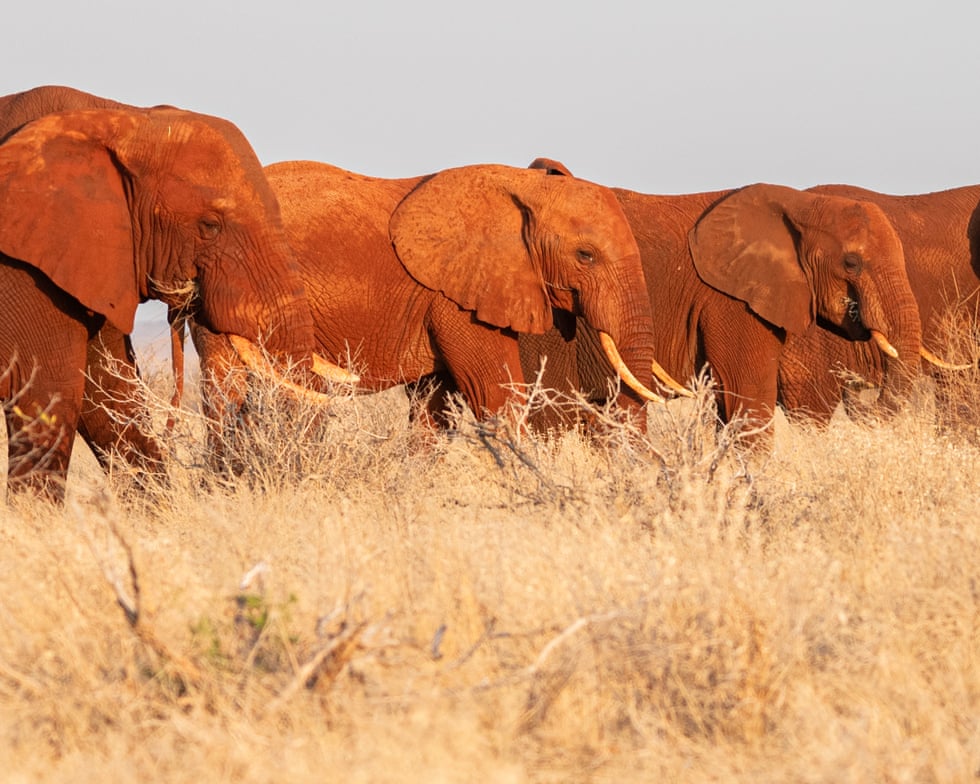
This article by Ryan Truscott was first published by Mongabay on 20 May 2026. Lead Image: Elephants (Loxodonta africana) in Malawi in 2006. Image by st georges via Flickr (CC BY-NC-ND 2.0).
Help to protect wildlife
Protect wildlife by making a monthly donation as little as $5.
It only takes a minute!



Leave a Reply