
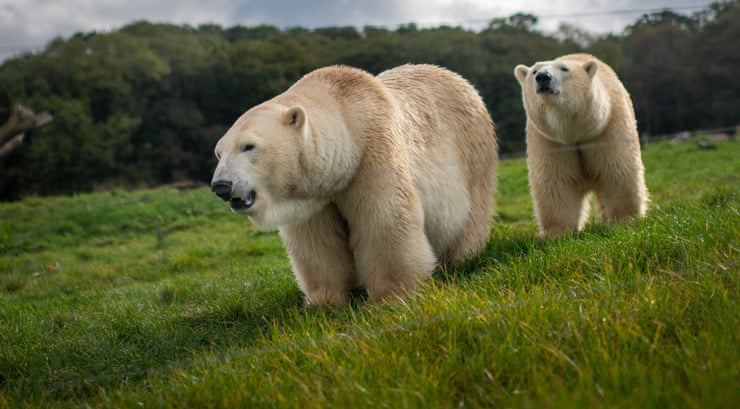
The oldest known polar bear fossils hail from Svalbard and northern Norway and are dated at 115,000–130,000 years old, before the beginning of the last Ice Age.
But some biologists think that polar bears diverged from brown bears as early as 600,000 years ago.
According to research, polar bears evolved from brown bears that ventured onto the frozen ocean to stalk marine mammals during the last major period of glaciation.
Through natural selection, the palest individuals with the greatest amount of fat would have had the best chance to survive and therefore reproduce.
It was not a single, clean-cut departure, however, and repeated pairings between both species occurred (DNA analysis shows only a 1 per cent difference between polar bears and one Alaskan brown bear population).
Shrinking sea-ice is forcing landlocked polar bears to mingle with their southern cousins once again, particularly as the latter are now travelling farther north.
In coastal Arctic Alaska, grizzlies have been observed feasting on bowhead whale carcasses, sometimes in the company of polar bears, and interbreeding has been documented.
This article by Michael Engelhard was first published by Discover Wildlife on 2 September 2026.
 Go Premium and Protect Wildlife
Ads are necessary to keep our website running, but they can clutter the breathtaking imagery of the animals you love. For less than the price of a coffee ($5/mo) you can become a Premium Member and enjoy 100% ad-free browsing while supporting the vital work of our conservation partners.
Our conservation partners guarantee at least 80 percent of the subscriptions are used for fieldwork rather than administration and fundraising.


Leave a Reply