
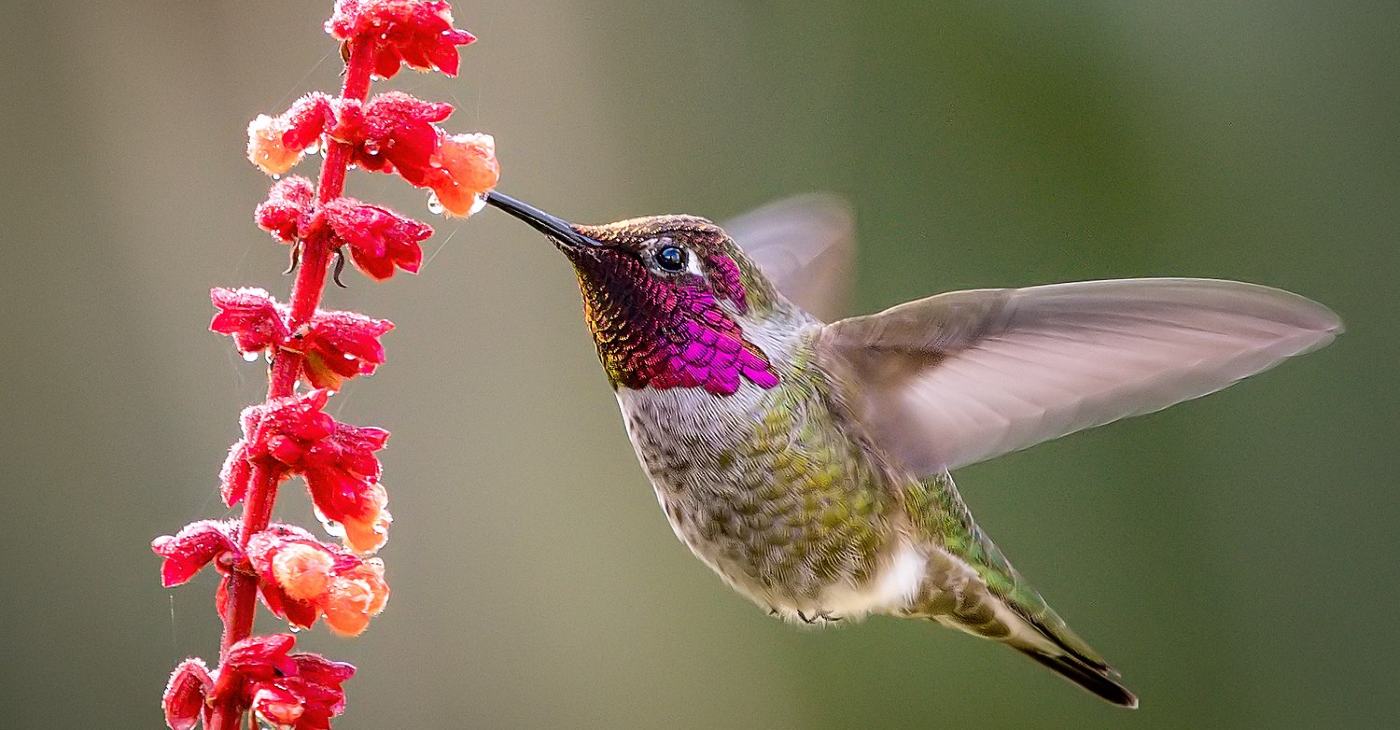
The profusion of hummingbird feeders in California homes has not only allowed some hummingbirds to expand their range, but has also altered the shape of their beaks.
Native to Southern California, Anna’s hummingbirds have, over the last century, extended their range into the northern end of the state.
Their migration followed the adoption of feeders and the planting of eucalyptus trees, which can supply nectar year-round, according to the study, published in Global Change Biology.
Researchers drew on annual bird surveys dating back to 1938, comparing bird numbers against census data, maps of eucalyptus trees, and ads for hummingbird feeders published in local newspapers — a proxy for the prevalence of feeders.
When researchers examined museum specimens of Anna’s hummingbirds, they noticed a dramatic shift in the shape of their beaks around the middle of the century, a transformation that unfolded in the space of around 10 generations, Science reported.
The first patent for a feeder was filed in 1947. Between the 1930s and the 1950s, the beaks of Anna’s hummingbirds grew noticeably longer and larger — changes that would allow birds to draw more nectar from feeders.
The shift was widespread, except in cooler parts of Northern California, where beaks actually shrank. Researchers showed that hummingbirds use their beaks to dissipate heat, meaning that smaller beaks would allow birds to conserve more heat.
This article was first published by Yale Environment 360 on 30 May 2025. Lead Image: An Anna’s hummingbird at a feeder in Sea Ranch, California. Frank Schulenburg via Wikipedia.
Wildlife in catastrophic decline
The 73% decline in vertebrate wildlife populations during the last 50 years (mammals, birds, amphibians, reptiles and fish), is primarily driven by human activities that threaten biodiversity.
Habitat Loss and Degradation – human activities like deforestation, urbanization, and agriculture have led to the destruction and fragmentation of natural habitats, reducing the space and resources available for wildlife.
Pollution – air, water, and soil pollution from industrial activities, agriculture, and other sources can harm wildlife directly or indirectly by affecting their habitats and food sources.
Climate Change – changing weather patterns, rising temperatures, and sea levels are disrupting ecosystems and impacting species’ ability to adapt and survive.
Overexploitation of Resources – unsustainable hunting, fishing, and logging practices can lead to the depletion of populations and the loss of biodiversity.
Invasive Species – the introduction of non-native species can disrupt ecosystems, compete with native species, and threaten their survival.
 Donate
Help to protect wildlife by donating as little as $5. Our conservation partners spend at least 80 percent of the money raised on actual fieldwork rather than administration and fundraising.



Leave a Reply