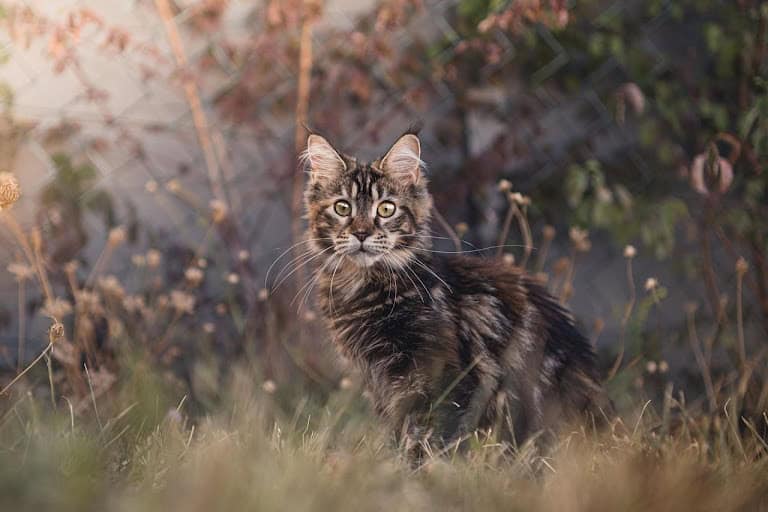
With a majestic ruff and a tail like a feathered plume, the Norwegian Forest Cat looks as if it stepped right out of a Norse legend. These gentle giants are very real, carrying the history of Scandinavia’s ancient forests in their DNA. Their appearance is one of wild, weathered beauty, but behind those knowing eyes lies a calm and surprisingly gentle soul.
Many people spot their impressive size and luxurious coat and immediately think they’re looking at a Maine Coon. While they share a stunning appearance, the Wegie cat, known in its homeland as the skogkatt (or “forest cat”), is a distinct breed with its own unique story and temperament. Common knowledge among cat enthusiasts holds that their personality is more that of a gentle observer than a demanding lap cat, a key difference for potential owners to understand.
This guide explores what truly makes them special, from their history as climbers on Viking ships to their unique physical traits. It provides a clear picture of their practical care needs and helps you discover whether this intelligent, independent cat is the right companion to welcome into your home.

What Is a ‘Skogkatt’? Uncovering the Breed’s Viking-Era Roots
Long before they were a beloved breed around the world, these majestic felines were a part of the Scandinavian wilderness. In their native Norway, they are known by the name skogkatt (pronounced SKOAG-katt), which literally translates to “forest cat.” This name perfectly captures their essence as a natural breed, hardened by the harsh northern climate and seemingly carved right out of the landscape itself. They are not a modern creation of breeders, but rather a product of their environment.
The history of the skogkatt is deeply woven into Norwegian folklore and legend. Many believe their ancestors were the very cats that accompanied Viking explorers on their longships, acting as prized mousers to protect vital food supplies. These cats match descriptions from Norse mythology of the giant felines that pulled the chariot of the goddess Freya. This storied past gives the breed an aura of ancient mystery and rugged independence.
Despite this legendary lineage, the Norwegian Forest Cat almost vanished. By the early 20th century, crossbreeding with free-roaming domestic cats had pushed the pure skogkatt to the brink of extinction. A dedicated group of Norwegian cat enthusiasts launched a preservation effort, and in 1977, their work paid off when the breed was officially recognized. This rescue story turned the skogkatt into a national treasure, preserving the unique physical traits that tell the story of their wild heritage.
How to Spot a True Wegie: Key Features Beyond the Fluff
While their impressive size and magnificent tail are the first things you might notice, the true markers of a Norwegian Forest Cat are found in their distinct facial structure. Their head forms a near-perfect equilateral triangle from their chin to the tips of their ears. But the most telling feature is their straight nose profile. Unlike many cat breeds that have a “stop” or curve where the nose meets the forehead, a Wegie’s nose runs in a straight line from their brow to its tip, giving them a noble and uniquely wild appearance.
That famous fluff isn’t just for show; it’s a highly functional double coat designed for survival. This specialized fur works like a high-tech winter jacket. The outer layer consists of long, glossy guard hairs that act as a waterproof shell, repelling snow and rain. Beneath this lies a dense, woolly undercoat that provides incredible insulation, keeping the cat warm even in the harshest Nordic climates. This two-layer system is a direct inheritance from their forest-dwelling ancestors.
These features—the triangular head, the straight profile, and the all-weather coat—combine to create an animal that looks both elegant and rugged. It’s a look born from necessity, reflecting their history as the hardy skogkatt of Norway. This powerful build is more than just an aesthetic; it supports a surprisingly large and muscular frame, which is an important consideration for any potential owner.
How Big Do Norwegian Forest Cats Actually Get? A Guide to Size and Weight
That powerful frame isn’t just an illusion created by fluff; these are genuinely large breed cats. One of the most fascinating traits of Wegie cat size is their slow development. Unlike a typical domestic cat that reaches its full size in about a year, a Norwegian Forest Cat grows slowly and steadily, only reaching their final weight and muscular maturity around age five. This means your adorable, oversized kitten will keep filling out for a surprisingly long time.
To put that in perspective, a fully grown male can easily be double the weight of an average house cat. While size varies, here is what you can generally expect:
- Male Norwegian Forest Cat: 13 – 22 lbs (6 – 10 kg)
- Female Norwegian Forest Cat: 8 – 18 lbs (3.6 – 8 kg)
- Average Domestic Cat: 8 – 10 lbs (3.6 – 4.5 kg)
This substantial size is a hallmark of the breed, placing them firmly in the “gentle giant” category of the feline world and contributing to their majestic presence.
Norwegian Forest Cat vs. Maine Coon: How to Tell These Gentle Giants Apart
At first glance, the Norwegian Forest Cat and the Maine Coon look like they could be long-lost twins. This common “Wegie cat vs Maine Coon” confusion is understandable, as both are among the world’s most beloved large fluffy cat breeds. But once you know where to look, their unique features become as clear as day, revealing two very different histories and head-to-tail profiles.
The clearest distinction lies in their face. A Norwegian Forest Cat has a distinct, equilateral triangle-shaped head, where a straight line can be drawn from the tip of each ear to the chin. A key giveaway is the nose profile: a Wegie’s is perfectly straight from their brow to the tip, with no dip or curve. A Maine Coon, by contrast, has a more square-shaped muzzle and a gently curved, or “scooped,” nose profile, giving them a slightly different expression.
Their coats, while both impressive, also tell a different story. The Wegie’s double coat was built for harsh Scandinavian winters, with a dense, woolly undercoat for insulation and long, glossy guard hairs to repel water and snow. The Maine Coon’s coat is often described as “shaggy” and feels silkier, and it isn’t as uniformly dense as the Wegie’s. This difference reflects their separate origins, with the Wegie hailing from Norway and the Maine Coon from the Northeastern United States.
To add another layer, these two aren’t the only gentle giants on the block; a Siberian cat as an alternative also boasts a similar size and weatherproof coat. But distinguishing these cats by appearance is only half the story. Their temperaments are what truly define them as companions.
What’s It Like to Live With a Wegie? A Guide to Their Temperament
Beyond their striking looks, the true magic of the Norwegian Forest Cat is found in their personality. Known as a “gentle giant cat,” their large size is matched by an equally large capacity for patience and calm. The personality and temperament of a Wegie is a wonderful blend of playful curiosity and serene companionship. This makes them fantastic family pets, as they are generally sociable and tolerant. Many owners find the skogkatt temperament with dogs and children to be remarkably easygoing, often observing from a slight distance before deciding to join the fun.
One of the most defining traits of their affection style is often described as “near you, not on you.” Unlike a classic lap cat who demands constant physical contact, a Wegie shows love by being present. They will follow you from room to room, settle on a chair across from your desk, or nap at the foot of your bed. They are devoted companions who offer a steady, quiet presence, preferring to supervise your life rather than sit directly in the middle of it. This independent-yet-loving nature is perfect for people who want an affectionate cat without constant demands for attention.
This intelligence is often channeled into another key instinct: climbing. Descended from cats that scaled the trees and cliffs of Norway, your Wegie has powerful claws and an innate desire to get up high. Don’t be surprised to find them surveying their kingdom from the top of a bookshelf, refrigerator, or a tall cat tree. Providing vertical space is essential for their happiness. In short, living with a Wegie means sharing your home with a:
- Playful but Gentle spirit.
- Intelligent and Curious explorer.
- Affectionate but Not a Lap Cat companion.
- Natural-Born Climber who loves high perches.
This combination of a calm demeanor and a wild heart makes them incredible companions, but that adventurous spirit also means their magnificent coat needs regular care to stay pristine.
Managing the Majestic Double Coat: Your Weekly Grooming Blueprint
That magnificent coat might look like a full-time job, but caring for a double coat cat like a Wegie is surprisingly manageable. Unlike the easily tangled fur of a Persian, the Norwegian Forest Cat’s slick guard hairs help prevent serious matting. The key is a consistent, gentle routine. A weekly brushing session of about 15-20 minutes is usually enough to keep their coat healthy and your furniture less furry. You’ll notice shedding increases in the spring and fall as they blow their seasonal undercoat; during these times, a couple of sessions per week will help with managing heavy shedding in cats.
To make this wegie cat grooming guide work, you only need three essential tools. Think of it as your simple grooming toolkit:
- A pin brush or slicker brush: This is your primary tool. It’s perfect for working through the long, glossy outer coat and removing loose fur without pulling.
- A stainless steel comb: Use this to gently probe deeper, checking for any hidden knots developing in the dense undercoat.
- A de-matter: This is your emergency tool. If you find a stubborn mat, this comb-like device with protected blades can safely cut through the knot without harming the cat’s skin.
While grooming, focus your efforts on a few high-friction areas that are prone to tangles. The most common trouble spots are under their front legs (the “armpits”), around their impressive neck ruff, and on their fluffy hind legs, often called their “britches.” These areas get matted from the simple motion of walking and lying down. A quick, gentle check in these spots each week will prevent small tangles from becoming big problems, ensuring your adventurous cat is always comfortable and ready to play.
Beyond the Catnip Mouse: Keeping Your Wegie’s Mind and Body Active
After a good grooming session, your Wegie is primed for adventure. Their history as resourceful survivors in the forests of Norway has blessed them with a sharp, inquisitive mind that needs a challenge. A simple ball or catnip mouse will only hold their attention for so long; these intelligent cats thrive when they have a “job” to do. Providing thoughtful wegie cat enrichment isn’t just about fun—it’s essential for preventing boredom and satisfying their natural instincts.
You will quickly discover that a Norwegian Forest Cat’s world is vertical. Don’t be surprised to find them confidently perched atop your tallest bookshelf or refrigerator, surveying their territory like a tiny woodland monarch. This climbing instinct is deeply ingrained. For them, having access to vertical space isn’t a bonus; it’s a fundamental need. A tall, sturdy cat tree or a series of wall-mounted shelves gives these athletic climbers an appropriate outlet for their energy and a secure place to relax.
To truly engage their brilliant mind, consider swapping a standard food bowl for a puzzle feeder. Making them nudge, paw, and think to get their kibble satisfies their problem-solving nature and mimics the hunt. A daily 15-minute interactive play session with a wand toy is also one of the best toys for a Norwegian Forest Cat, as it helps burn off the impressive energy these large breed cats possess. All that activity requires the right fuel to power their magnificent bodies.
The Best Diet for a Large, Active Cat Breed
All that climbing and pouncing requires high-quality fuel. As natural carnivores, Norwegian Forest Cats thrive on a diet rich in animal protein to support their significant muscle mass. When selecting the right Norwegian Forest Cat food, the most important thing you can do is read the ingredient label. Look for a formula where a named meat, such as chicken, turkey, or salmon, is listed as the very first ingredient. This “meat-first” approach ensures your Wegie is getting the building blocks they need to power their adventures, not empty fillers that can lead to weight gain.
Because of their large frame, managing your cat’s weight is one of the most critical aspects of their care. It can be tempting to keep the food bowl full for such a big cat, but free-feeding can easily lead to obesity. This extra weight puts significant stress on their bones and joints, which is a key concern for any large breed. Instead, the best diet for large breed cats involves portion-controlled meals served two or three times a day. This helps maintain a lean, athletic body condition and supports their long-term mobility and comfort.
Ultimately, feeding a Wegie correctly goes beyond simply satisfying their hunger—it’s a fundamental part of preventative health care. By providing a high-protein diet in controlled portions, you are actively helping to protect their joints and give them the sustained energy they need. A proper diet is your first and best tool for promoting a long and healthy life.
Key Health Risks and Lifespan: What Every Wegie Owner Should Know
Norwegian Forest Cats are a naturally robust and healthy breed, built to withstand tough climates. With proper care and a little bit of luck, the average lifespan of a Wegie is quite long, typically between 14 and 16 years. While they are generally hardy, like all purebreds, they do have a few genetic predispositions that responsible owners should be aware of, which can be managed through proactive choices.
Among the most significant of the common Wegie health problems is a heart condition called Hypertrophic Cardiomyopathy (HCM). In simple terms, this disease causes the heart’s walls to thicken, which can make it difficult for the heart to pump blood effectively. While the thought of any heart condition is concerning, it’s a well-documented issue in many cat breeds, and awareness is the first step toward prevention.
This is precisely why choosing a reputable breeder is so crucial. A good breeder will screen their cats for HCM and for a rare but fatal inherited condition called Glycogen Storage Disease type IV in cats (GSD IV). They use genetic testing and health evaluations to ensure they aren’t passing these problems on to their kittens. By asking for proof of these health screenings, you are taking the single most important step in ensuring your future companion has the best possible start in life.
Finally, let’s clear up a common misconception: are Norwegian Forest Cats hypoallergenic? The answer is a definitive no. With their thick double coat and seasonal shedding, they produce the dander and saliva that trigger allergies in sensitive people. If allergies are a concern in your household, this beautiful breed is unfortunately not the right choice for you.
Is a Norwegian Forest Cat the Right Feline Friend For You?
Beyond the image of a “big, fluffy cat” lies an animal with an ancient spirit, deep intelligence, and unique needs. Understanding these traits is the key to deciding if this gentle giant from the north belongs in your home.
To make your final decision, use this simple “Right Fit Test.” It’s the last step in choosing a cat breed that truly matches your life.
- You’re a great match if: You love an affectionate but independent cat, you’re prepared for weekly grooming, and your home has room for climbing.
- A Wegie may not be for you if: You want a constant lap cat, you have no time for grooming, or you are looking for a low-shedding pet.
Successful Wegie ownership is about appreciating a companion who shares your space more like a majestic roommate than a constant shadow. By choosing this breed, you are inviting a piece of living history to perch on your highest bookshelf and patrol your home with quiet confidence. With these insights, you can decide if this mythical creature is the perfect, independent soul for your world.

Leave a Reply