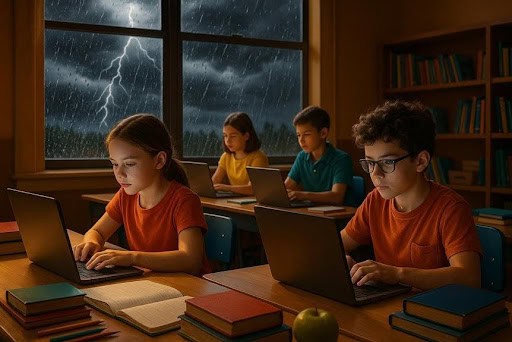
Online schools serve as an essential climate adaptation strategy, ensuring you have continuity in education during natural disasters. By offering flexible and accessible learning opportunities, these platforms allow you to engage in your studies regardless of external disruptions. They cater to diverse learning needs, bridging gaps created by climate events. In addition, robust online infrastructure and proactive adaptation to climate-related challenges enhance your learning experience. Uncover how these digital solutions are reshaping education in an unpredictable world.
The Role of Online Schools in Addressing Climate Change Challenges in Education
As climate change continues to disrupt traditional educational environments, online schools emerge as an important solution that guarantees learning remains accessible and uninterrupted.
Virtual classrooms allow you to engage in adaptive learning tailored to your needs, ensuring that education adapts alongside environmental challenges. This flexibility fosters climate literacy, equipping you with the knowledge to understand and address climate issues.
Additionally, online schools promote digital equity, providing all students, regardless of their circumstances, the opportunity to learn without interruption.
By embracing this model, you can actively participate in a resilient educational framework that not only withstands climate change but also empowers you to drive solutions for a sustainable future.
This proactive approach is crucial in preserving both quality education and freedom of learning.
Understanding the Impact of Climate Change on Education
Climate change is reshaping the landscape of education, particularly through the impact of disasters on learning environments.
When schools close due to extreme weather events, the shift to remote education becomes not just a necessity but a lifeline for students.
Understanding these dynamics helps you appreciate how online schools can serve as an essential adaptation strategy in an increasingly unpredictable world.
Effects of Disasters on Learning
While the increasing frequency and severity of natural disasters disrupt educational systems, the long-term consequences on learning are often overlooked. You mightn’t realize that these learning disruptions can create significant gaps in knowledge and skills.
When students miss school due to disasters, it hampers their academic progress and emotional well-being. Furthermore, the stress of recovery can overshadow educational priorities, leaving students vulnerable to falling behind.
By recognizing the impact of climate change on education, you can advocate for proactive disaster recovery strategies that prioritize continuity in learning. Emphasizing flexible educational approaches guarantees that students have access to resources and support, fostering resilience in the face of future calamities.
Your awareness can drive change and safeguard educational opportunities for all.
Shift to Remote Education
The disruptions caused by natural disasters highlight the urgent need for educational systems to adapt, prompting a significant shift toward remote education.
As climate change intensifies, you need to embrace remote learning as a viable solution to guarantee continuity. Digital classrooms provide flexibility, allowing students to engage from safe locations during emergencies. This shift empowers you to access quality education regardless of physical disruptions, fostering resilience in the face of climate threats.
Furthermore, the integration of technology can enhance learning experiences, making education more interactive and accessible. By prioritizing remote education, you’re not just safeguarding academic progress; you’re also promoting a culture of adaptability that prepares students for an uncertain future.
Embrace this transformation and advocate for sustainable educational practices.
Ensuring Educational Continuity With Online Schools
Online schools offer flexible learning opportunities that adapt to your schedule and environment, ensuring education continues despite disruptions.
By leveraging technology, you can access a wealth of resources that traditional classrooms mightn’t provide, enhancing your learning experience. Students in online middle school programs are particularly well-positioned to benefit from these flexible learning systems, as they rely on structured yet adaptable digital environments to maintain academic progress during climate-related disruptions.
This approach not only maintains educational continuity but also empowers you to thrive in changing circumstances.
Flexible Learning Opportunities
As communities face increasing challenges from climate change, ensuring educational continuity through flexible learning opportunities becomes essential.
Online schools provide adaptive learning environments that cater to individual needs, allowing you to navigate your educational journey despite disruptions. With personalized pathways, you can choose how and when to engage with the curriculum, empowering you to maintain progress even in the face of adversity.
This flexibility not only accommodates varying schedules and learning styles but also promotes resilience and independence. By prioritizing adaptive learning, online education helps you stay connected to your goals, ensuring that knowledge acquisition isn’t compromised during natural disasters.
Ultimately, embracing these flexible opportunities supports both personal growth and community stability in uncertain times.
Access to Resources
While many educational institutions struggle to maintain resources during climate-related disruptions, online schools can seamlessly provide access to essential tools and materials.
You’ll find that these platforms enhance resource accessibility, allowing students to engage with curriculum and support services regardless of physical location.
However, it’s vital to address the digital divide that can hinder some learners from benefiting fully. By investing in infrastructure and providing devices to underserved communities, online schools can bridge that gap, ensuring that all students have equal opportunities for success.
This proactive approach not only safeguards educational continuity but also empowers learners to take control of their education, fostering resilience in the face of climate challenges.
Embracing online education can be a transformative step toward equitable access.
Essential Features for Resilient Online Learning Platforms
To guarantee resilience in online learning platforms, educators must prioritize several essential features that enhance adaptability and user experience.
First, ascertain platform reliability with robust infrastructure to minimize downtime during crises. Next, incorporate user-friendly interfaces that simplify navigation, enabling learners to access materials swiftly.
Flexibility is vital; offer varied content formats—videos, readings, and interactive tools—that cater to diverse learning styles. Additionally, integrate real-time communication channels, fostering collaboration and support among students and instructors.
Security features are paramount too; protect sensitive data to maintain trust. Finally, provide offline access options, allowing learning to continue even when internet connectivity falters.
How Online Schools Foster Community Resilience
Online schools play a pivotal role in enhancing community resilience, especially during times of crisis. They create an environment where learners can thrive, regardless of external challenges. Here’s how they contribute:
- Fostering community support through virtual networks, enabling families to connect and share resources.
- Encouraging digital collaboration among students and educators, promoting innovative problem-solving.
- Providing flexible learning options, so education continues uninterrupted during disasters.
- Strengthening local identity by incorporating community-specific content that resonates with students.
- Empowering families to take an active role in their children’s education, enhancing overall community engagement.
Future Trends in Online Education and Climate Risks
As climate risks escalate, the landscape of online education is shifting to meet the evolving needs of learners and communities.
You’ll notice a growing emphasis on adaptive learning, allowing educational platforms to tailor content based on individual progress and local conditions. This personalization fosters engagement and resilience, especially during disruptive events.
Additionally, technology integration is becoming essential; tools like AI and virtual reality enhance learning experiences, making them more immersive and accessible.
As these trends unfold, online schools won’t just offer continuity but become proactive in addressing climate-related challenges.
Conclusion
In summary, while some may argue that online schools lack the personal touch of traditional classrooms, they’re essential for maintaining educational continuity amid climate-related disruptions. By leveraging technology, these platforms guarantee that students continue learning, regardless of external challenges. Additionally, they foster community resilience by connecting learners and educators in innovative ways. Embracing online education not only safeguards academic progress but also empowers communities to adapt and thrive in the face of climate change.

Leave a Reply