
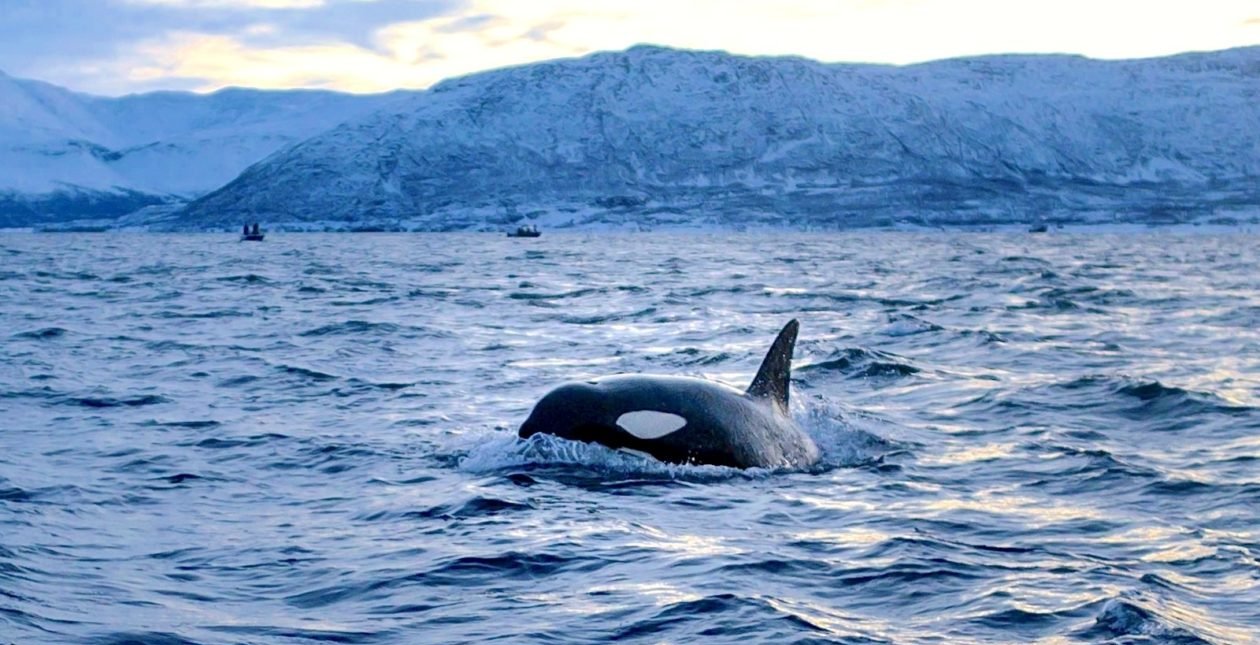
Off the coast of Galicia, Spain, Iberian orcas have been ramming boats again—but scientists say it’s not aggression.
According to National Geographic, experts believe the whales have developed a learned cultural behavior, essentially turning rudder-bashing into a game passed down to younger pod members.
Since 2020, the pod—made up of about 40 orcas—has been involved in hundreds of encounters with vessels, sometimes disabling or even sinking boats.
Despite the damage, no humans have been injured, and researchers stress that if the orcas wanted to sink ships, they easily could.
Instead, they seem focused on breaking rudders, a behavior that senior scientist Naomi Rose of the Animal Welfare Institute describes as playful rather than hostile.
The animals are highly intelligent and known for developing unique cultural traditions, from hunting techniques to quirky fads like wearing salmon as “hats.”
With the ramming still ongoing in 2025, researchers worry the behavior has become a lasting cultural trait for this critically endangered group.
While unsettling for mariners, scientists emphasize that retaliation is not the answer. Some crews have resorted to harmful tactics like throwing firecrackers, but such measures are both cruel and counterproductive.
The International Whaling Commission has advised against aggression, recommending instead that boats remain calm, quiet, and attempt to move away.
Spain’s Ministry of the Environment is even exploring modifications to rudder designs to deter orcas safely, alongside real-time tracking systems to help vessels avoid encounters.
Ultimately, these interactions highlight a bigger truth: the ocean is the orcas’ home, not ours. As Rose puts it, “We’re in their living room.
We are the guests.” Respecting these remarkable animals and adapting human behavior is essential to protecting them and preserving balance in shared waters.
This article by Nicholas Vincent was first published by One Green Planet on 11 September 2025. Lead Image Credit: Daniel Chetroni/Shutterstock.
What you can do
Help to protect wildlife by donating as little as $5 – it only takes a minute!
 Donate
Our conservation partners spend at least 90 percent of the money raised on actual fieldwork rather than administration and fundraising.




Leave a Reply