
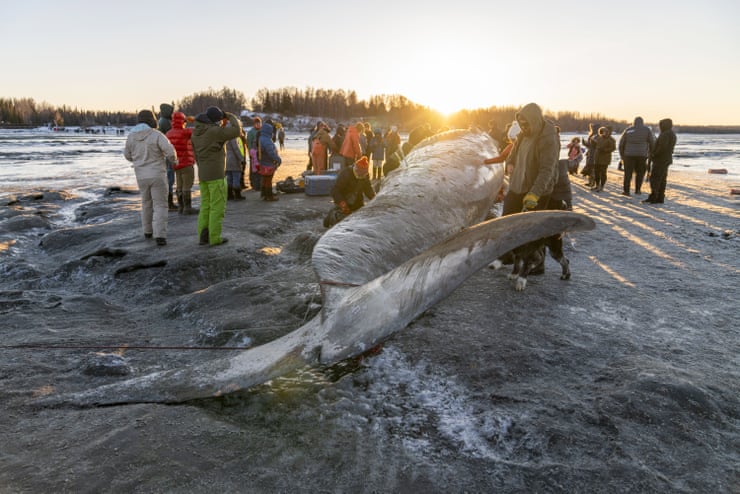
A second dead grey whale has washed ashore in British Columbia in less than a week.
Fisheries and Oceans Canada has confirmed that the latest dead whale was reported on May 11 in Haida Gwaii near the community of Skidegate, and a marine mammal response team is working with local First Nations to coordinate a necropsy.
The cause of death is unknown, and Fisheries and Oceans Canada says confirming what happened through necropsy reports may take up to three months.
Grey whale spotted swimming near Vancouver’s English Bay
The latest case comes after Parks Canada said a dead whale was spotted floating off Vancouver Island on May 6, before it washed ashore on Long Beach in Pacific Rim National Park Reserve near Tofino.
The federal department has warned people to not touch the dead whales and to keep dogs leashed, and is also asking anyone who sees whales being harassed or disturbed to report to the agency immediately.
There are three grey whale populations in the North Pacific and the federal department says it hasn’t been able to establish which the dead animal found on Haida Gwaii belonged to.
Two of the populations are classified as endangered.
This article by Chuck Chiang was first published by Global News on 13 May 2025. Lead Image: A grey whale carcass lies on the shore in Haida Gwaii. Fisheries and Oceans Canada says it is working with local First Nations to conduct a necropsy. (Kellie Hett/Instagram).
Wildlife in catastrophic decline
The 73% decline in vertebrate wildlife populations during the last 50 years (mammals, birds, amphibians, reptiles and fish), is primarily driven by human activities that threaten biodiversity.
Habitat Loss and Degradation – human activities like deforestation, urbanization, and agriculture have led to the destruction and fragmentation of natural habitats, reducing the space and resources available for wildlife.
Pollution – air, water, and soil pollution from industrial activities, agriculture, and other sources can harm wildlife directly or indirectly by affecting their habitats and food sources.
Climate Change – changing weather patterns, rising temperatures, and sea levels are disrupting ecosystems and impacting species’ ability to adapt and survive.
Overexploitation of Resources – unsustainable hunting, fishing, and logging practices can lead to the depletion of populations and the loss of biodiversity.
Invasive Species – the introduction of non-native species can disrupt ecosystems, compete with native species, and threaten their survival.
 Donate
Help to protect wildlife by donating as little as $5. Our conservation partners spend at least 80 percent of the money raised on actual fieldwork rather than administration and fundraising.


Leave a Reply