
The Trump administration on Monday announced a plan to open 58.5 million acres of undeveloped lands within the National Forest System to road development and construction by repealing the Roadless Area Conservation Rule, known as the “Roadless Rule.”
The rule was established in 2001 to protect roadless areas from road construction and timber harvesting, as well as to safeguard biodiversity, water resources and recreation.
Stripping Roadless Rule protections is especially significant for Alaska’s 17-million-acre Tongass National Forest.
“Eliminating the Roadless Rule from the Tongass would remove protections for about half the forest and add almost 190,000 acres to an inventory of lands ‘suitable’ for timber production,” a press release from Earthjustice said. “Many of these lands are in parts of the forest where previous clear-cut logging decimated vast swaths of older trees, making the remaining intact stands of mature and old-growth trees particularly valuable as fish, bird, and wildlife habitat, and for Indigenous communities and others who rely on the forest for their livelihood, wellbeing, and spiritual and cultural ways of life.”
Secretary of Agriculture Brooke Rollins called the decades-old rule “outdated.”
In addition to the Tongass National Forest — the largest temperate rainforest in North America — millions of acres of Idaho’s Frank Church-River of No Return Wilderness and Reddish Knob, located in the Shenandoah Mountains of Virginia, would be open to road building, reported The New York Times.
“The roadless rule has protected 58 million acres of our wildest national forest lands from clear-cutting for more than a generation,” said Drew Caputo, Earthjustice’s vice president of litigation for lands, wildlife and oceans, as The Washington Post reported. “The Trump administration now wants to throw these forest protections overboard so the timber industry can make huge money from unrestrained logging.”
The Roadless Rule dates back to the 1990s, when the United States Forest Service was asked by former President Bill Clinton to come up with methods to protect the increasingly scarce roadless sections of national forests. These lands were considered essential for species who were losing their habitats to large-scale timber harvests and encroaching development.
“Most Americans value these pristine backcountry areas for their sense of wildness, for the clean water they provide, for the fishing and hunting and wildlife habitat,” said Chris Wood, chief executive of conservation organization Trout Unlimited, as reported by The New York Times.
Wood was the Forest Service’s senior policy adviser when the Roadless Rule was developed and recalled its wide public support.
“I don’t think the timber industry wants to get into these areas,” Wood said. “They’re wildly controversial, and they’re too expensive to access. I believe when they take this to rule making, they will realize how wildly unpopular getting rid of that rule is and how little gain there is to be had from it.”
Environmental groups vowed to challenge the plan in court, saying it could destroy some of the country’s untouched landscapes.
Randy Spivak, the Center for Biological Diversity’s public lands policy director, said eliminating the protections would put safe, clean drinking water at risk and invite wildfires.
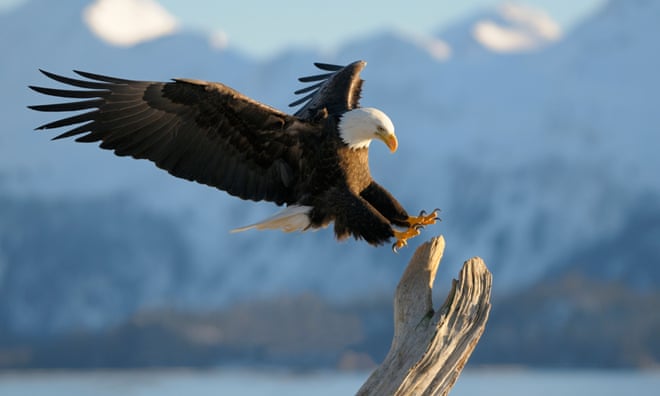
For decades, Tongass National Forest has been at the center of the battle over the Roadless Rule. In it are 800-year-old hemlock, cedar and Sitka spruce, many over 800 years old. These ancient trees provide essential habitat for 400 wildlife species, including salmon, bald eagles and the largest concentration of black bears on Earth.
The cathedral-like stands also store over 10 percent of the carbon dioxide accumulated by all the country’s national forests, the government said, as The New York Times reported.
“The Trump administration’s disdain for nature knows no bounds,” Spivak said. “The roadless rule is one of our country’s most important conservation achievements, and we’ll fight like hell to keep these protections in place.”
This article by Cristen Hemingway Jaynes was first published by EcoWatch on 25 June 2025. Lead Image: A bald eagle on tree in Takatz Bay on Baranof Island, Tongass National Forest, Alaska on July 13, 2019. Wolfgang Kaehler / LightRocket via Getty Images.
Wildlife in catastrophic decline
The 73% decline in vertebrate wildlife populations during the last 50 years (mammals, birds, amphibians, reptiles and fish), is primarily driven by human activities that threaten biodiversity.
Habitat Loss and Degradation – human activities like deforestation, urbanization, and agriculture have led to the destruction and fragmentation of natural habitats, reducing the space and resources available for wildlife.
Pollution – air, water, and soil pollution from industrial activities, agriculture, and other sources can harm wildlife directly or indirectly by affecting their habitats and food sources.
Climate Change – changing weather patterns, rising temperatures, and sea levels are disrupting ecosystems and impacting species’ ability to adapt and survive.
Overexploitation of Resources – unsustainable hunting, fishing, and logging practices can lead to the depletion of populations and the loss of biodiversity.
Invasive Species – the introduction of non-native species can disrupt ecosystems, compete with native species, and threaten their survival.
 Donate
Help to protect wildlife by donating as little as $5. Our conservation partners spend at least 80 percent of the money raised on actual fieldwork rather than administration and fundraising.



Leave a Reply