
Three new types of frogs were discovered during off-road scientific expeditions in the remote cloud-shrouded peaks of the Andes.
The secretive amphibians were found between 2021 and 2024 in the Cordillera de Huancabamba mountains of northern Peru—in forests and mountain trails with no road access.
The species were recently confirmed and named, and each one tells a different story, according to the team’s findings published in the journal Evolutionary Systematics.
“They’re small and unassuming, but these frogs are powerful reminders of how much we still don’t know about the Andes,” said Peruvian herpetologist Germán Chávez, who led the research.
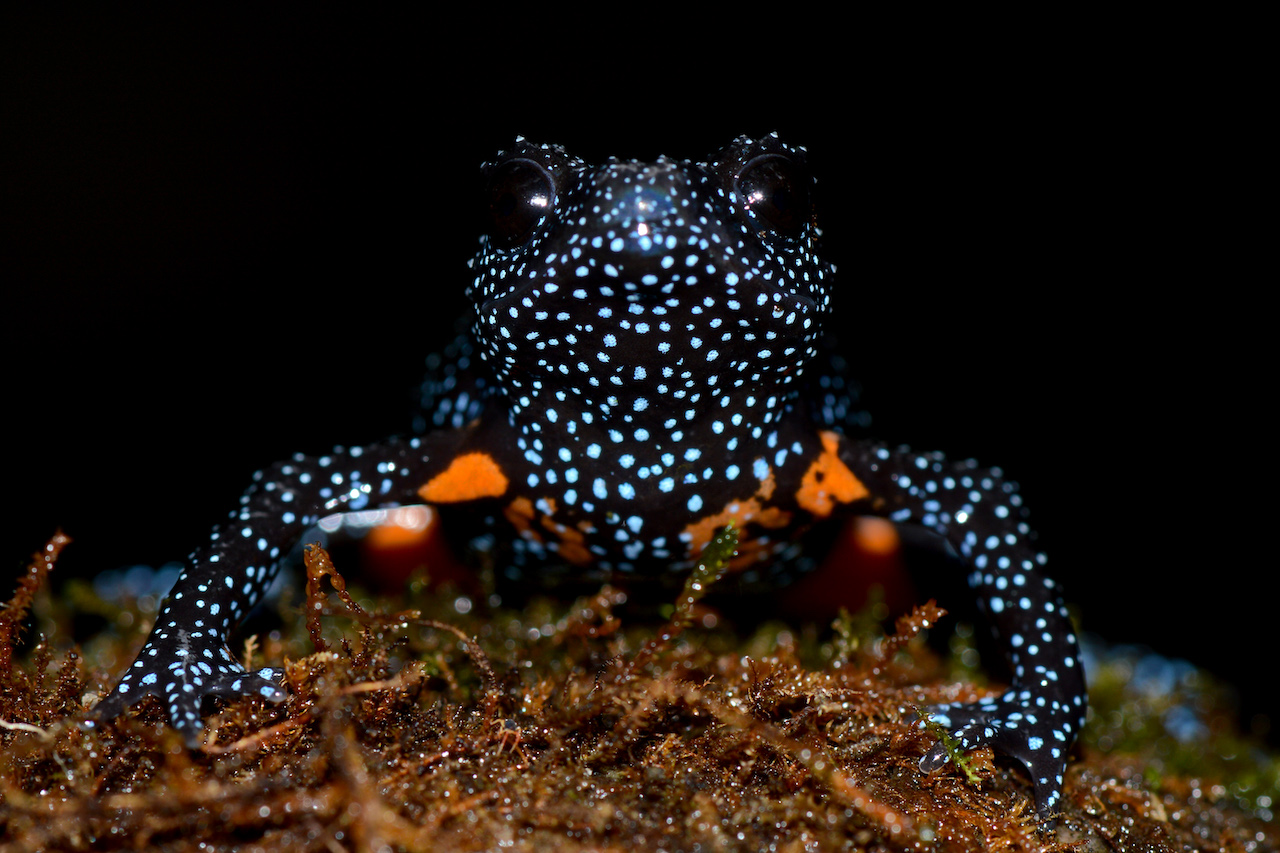
Pristimantis chinguelas, discovered on a cliffside, has a body dotted with prominent large tubercles on both sides.
Its high-pitched “peep” can be heard on humid nights, reported the researchers.
P. nunezcortezi lives near a cool mountain stream in a regenerating forest.

With large black blotches on axillae and groins, it was named in honor of ornithologist Elio Nuñez-Cortez, a conservation trailblazer in the region.
P. yonke, the smallest of the three, was found nestled in bromeliads at a chilly altitude of nearly 3,000 meters (9,800 feet).
Its name was a nod to ‘yonque,’ a sugarcane spirit consumed by locals to brave the highland cold.
Study co-author Karen Victoriano-Cigüeñas said, “Exploring this area is more than fieldwork – it’s an immersion into wilderness, culture, and resilience.”
“Many of these mountain ridges are isolated, with no roads and extreme terrain,” said co-author Ivan Wong.
“The weather shifts within minutes, and the steep cliffs make every step a challenge.
“It’s no wonder so few scientists have worked here before—but that’s exactly why there’s still so much to find.”
The number of individuals in the species is unknown, but co-author Wilmar Aznaran points out that the Cordillera de Huancabamba is not just a remote range.
“It’s a living archive of biodiversity and cultural legacy. And we’ve barely scratched the surface.”
This article was first published by Good News Network on 13 July 2025. Lead Image: New frog species Pristimantis chinguelas found in Peru – Ivan Wong / SWNS.
Wildlife in catastrophic decline
The 73% decline in vertebrate wildlife populations during the last 50 years (mammals, birds, amphibians, reptiles and fish), is primarily driven by human activities that threaten biodiversity.
Habitat Loss and Degradation – human activities like deforestation, urbanization, and agriculture have led to the destruction and fragmentation of natural habitats, reducing the space and resources available for wildlife.
Pollution – air, water, and soil pollution from industrial activities, agriculture, and other sources can harm wildlife directly or indirectly by affecting their habitats and food sources.
Climate Change – changing weather patterns, rising temperatures, and sea levels are disrupting ecosystems and impacting species’ ability to adapt and survive.
Overexploitation of Resources – unsustainable hunting, fishing, and logging practices can lead to the depletion of populations and the loss of biodiversity.
Invasive Species – the introduction of non-native species can disrupt ecosystems, compete with native species, and threaten their survival.
Help to protect wildlife by donating as little as $5. Our conservation partners spend at least 80 percent of the money raised on actual fieldwork rather than administration and fundraising.



Leave a Reply