
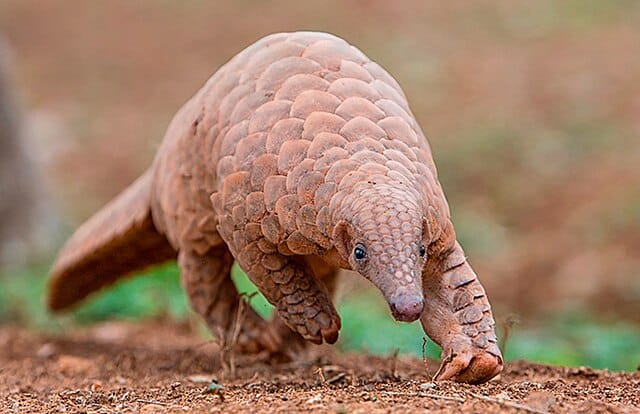
The Molopo Regional Court in Mahikeng, South Africa, sentenced two wildlife traffickers, Edward Motlatsi Phiri, 46, and Tlhoriso France Ralph, 51, to eight years in prison. They were convicted of smuggling a Temminck’s pangolin, a vulnerable species native to Southern and Eastern Africa, according to a statement released by the North West province’s environment agency.
The judgment, delivered on May 26, 2026, followed the arrest of four suspects on June 2, 2023, when law enforcement authorities, acting on a tip, intercepted a vehicle in which they were traveling and seized a live female pangolin (Smutsia temminckii) intended for sale.
During the court hearing three years later, charges against two accused traffickers were withdrawn while Phiri and Ralph were found guilty.
“This sentence sends a strong message that wildlife crime is a serious offense with devastating environmental consequences,” said Bitsa Lenkopane, with the Economic Development, Environment, Conservation and Tourism in the North West province, in a statement. “Every operation, every investigation, and every successful prosecution strengthen our collective fight against illegal wildlife trafficking.”
Pangolins are trafficked for their scales, worth thousands of dollars on the black market. They are falsely believed to have medicinal qualities in East Asia. The demand has driven steep declines in pangolin numbers worldwide: Six of the eight species are classified as endangered or critically endangered today. Pangolins are also consumed as bushmeat in parts of Africa.
These mammals are protected under South African law, which prohibits their possession, sale, display or transportation. Their international commercial trade is also banned under CITES, the global wildlife trade agreement.
Soon after the pangolin was seized, authorities brought it to the Johannesburg Wildlife Veterinary Hospital for immediate care, where it was named Naledi.
In a social media post, the hospital said Naledi “arrived in one of the worst conditions” — she was severely dehydrated, starving, emaciated, already in kidney failure, and was pregnant. Despite best efforts, Naledi and her unborn baby died.
“An entire future generation, gone forever because of greed and the illegal wildlife trade,” the statement said. “This sentence sends a powerful message: Wildlife crime is not a harmless offence. It causes immense suffering, destruction, and loss.”
The North West province environment agency said illegal trade in the region is due to “proximity to Botswana and the porosity of South Africa’s borders.” It called on communities to “work closely with law enforcement authorities by reporting suspicious activities linked to wildlife trafficking, illegal hunting, and the unlawful possession or trade of protected species.”
The illegal trade in pangolin scales seems to have slowed in recent years, but poaching hasn’t stopped. Conservationists say deterrents against wildlife crimes include stricter law enforcement, intelligence-led operations to dismantle the trafficking network, along with increased prosecution and convictions.
This article by Spoorthy Raman was first published by Mongabay on 10 June 2026. Lead Image: A Temminck’s pangolin in Mozambique. Image by Bart Wursten via iNaturalist (CC BY-NC).
Help to protect wildlife
Focusing on Wildlife works closely with local conservation partners in almost 50 countries to deliver locally led conservation solutions that are sustainable, scientifically robust, and linked to human well-being.
Our approach focuses on protecting and restoring habitats, saving species from extinction, and influencing global policy and business practices to prioritize nature.
Work with us to support the vital work of our conservation partners by making a monthly donation as little as $5.
Our conservation partners spend at least 80 percent of the money raised on actual fieldwork rather than administration and fundraising.




Leave a Reply