
Researchers have uncovered new information about a rare rodent known as the Wolffsohn’s viscacha, allowing them to reclassify the species from Data Deficient to Endangered on Argentina’s national Red List.
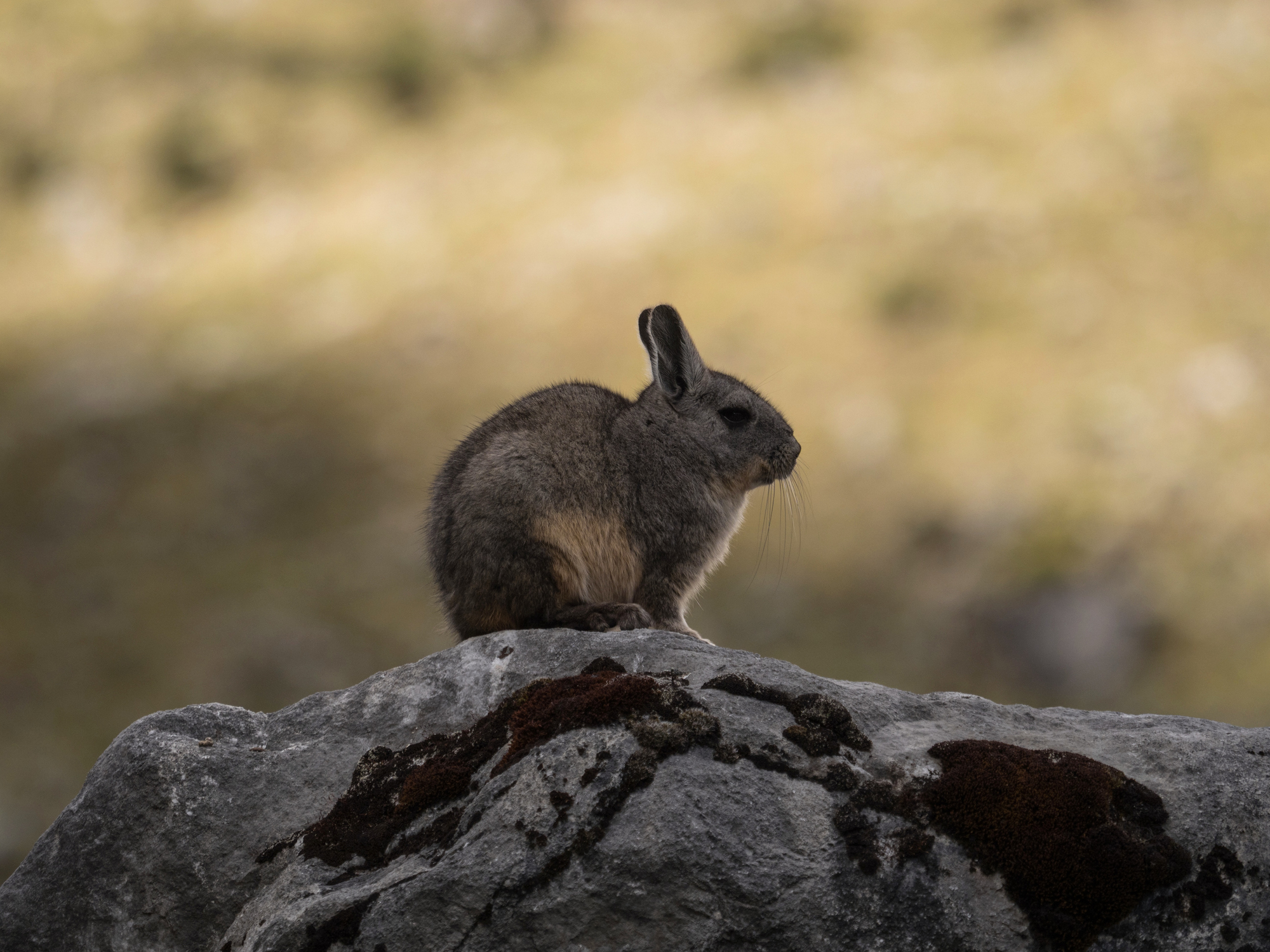
The Wolffsohn’s viscacha (Lagidium wolffsohni) is a relatively large rodent, measuring approximately 470mm from head to rear, with the tail extending up to 305mm. Looking like a cross between a chinchilla and a rabbit, it’s easily identifiable by its orange-clay colouration, short black ears and bushy tail.
The Wolffsohn’s viscacha is only found in the high-altitude Andes of Patagonia in Argentina and Chile, making it exceptionally hard to study. It’s one of South America’s least understood species, and until recently, very little was known about its distribution, population and threats.
A project supported by the Conservation Leadership Programme (CLP), a partnership between Fauna & Flora, BirdLife International and the Wildlife Conservation Society, set out to change that by sending out a team of researchers to study this elusive animal.
“We started this work because almost nothing was known about the Wolffsohn’s viscacha,” said Morgan Pendaries, co-leader of the research team. “People often assume that if a species is classed as Data Deficient it is safe, but that isn’t true. We now know the species occupies a much smaller area than previously thought, faces multiple threats and has disappeared from places where it was recorded in the past.”
The team, co-led by Pendaries and fellow conservationist Lucas Hormachea, surveyed 66 sites across the remote mountains of Patagonia, often working in extreme conditions without electricity or internet access. One expedition saw them having to break through ice blocking a river crossing so their vehicle could continue ahead.
“There were days when we were driving for eight hours through rocky terrain, sleeping in tents for more than two weeks and dealing with freezing temperatures and strong winds,” said Pendaries. “But then you climb onto a mountain ridge and there’s nobody else for miles. You’re looking at one of the wildest landscapes on Earth and watching a species that almost nobody has ever studied.”

Clear picture
The team discovered new colonies of the rodent and evidence of local population declines, forming the first detailed picture of the species’ status.
The Wolffsohn’s viscacha faces numerous threats – camera traps deployed near their colonies recorded interactions with invasive European hares and feral dogs. Interviews with locals confirmed that dog predation is an ongoing problem.
And it’s not just other wildlife that’s threatening this elusive rodent. The team determined that Wolffsohn’s viscachas avoid areas popular with mountain climbers, which in turn has shifted some of their range. Another concern is the increasing effects of climate change on the Patagonian Andes ecosystem.
The scientists also gained new insights into the rodent’s behaviour and ecology.
“Eight years ago, we thought the species was mostly active during the day,” said Pendaries. “Now we know it is far more nocturnal than we realised. Every year we uncover something new.”
More work to do
Although the Wolffsohn’s viscacha is now listed as Endangered on the Argentina Red List, this does not grant the species automatic protection under local law. To ensure the survival of this elusive rodent, a legislative proposal is being developed to declare it a Natural Heritage Monument in Argentina’s Santa Cruz province. This would protect the species under the country’s National Parks Law, alongside other species such as the deer-like taruca, jaguars and petrified forests.
Meanwhile, the CLP team is working with researchers in Chile to pursue global IUCN Red List assessment for the species.
Watch the Wolffsohn’s viscacha in the wild:
This article by Magda Patynska was first published by Discover Wildlife on 18 August 2026. Lead Image: Wolffsohn’s viscacha (Lagidium wolffsohni). Credit: Gonzalo Pardo / Conservation Leadership Programme.
What You Can Do
Subscribe to the vital work of our conservation partners for as little as $5 per month. All subscriptions are donated to wildlife charities.
Our conservation partners use at least 80 percent of the money raised on actual fieldwork rather than administration and fundraising.




Leave a Reply