
Visitors to Banff National Park are being warned to take care as officials issue a bear warning for the Lake Minnewanka area. The warning comes following a report that a female black bear with cubs tore open a tent in the Lake Minnewanka Trail campsite.
The tent was empty at the time while the owner was nearby in the designated cooking area, reported Rocky Mountain Outlook.
“The individual was behaving appropriately and the bears did not interact with them,” a communications officer for Banff National Park said. “No negative human-bear interaction was reported and the bears did not obtain any unnatural food rewards.”
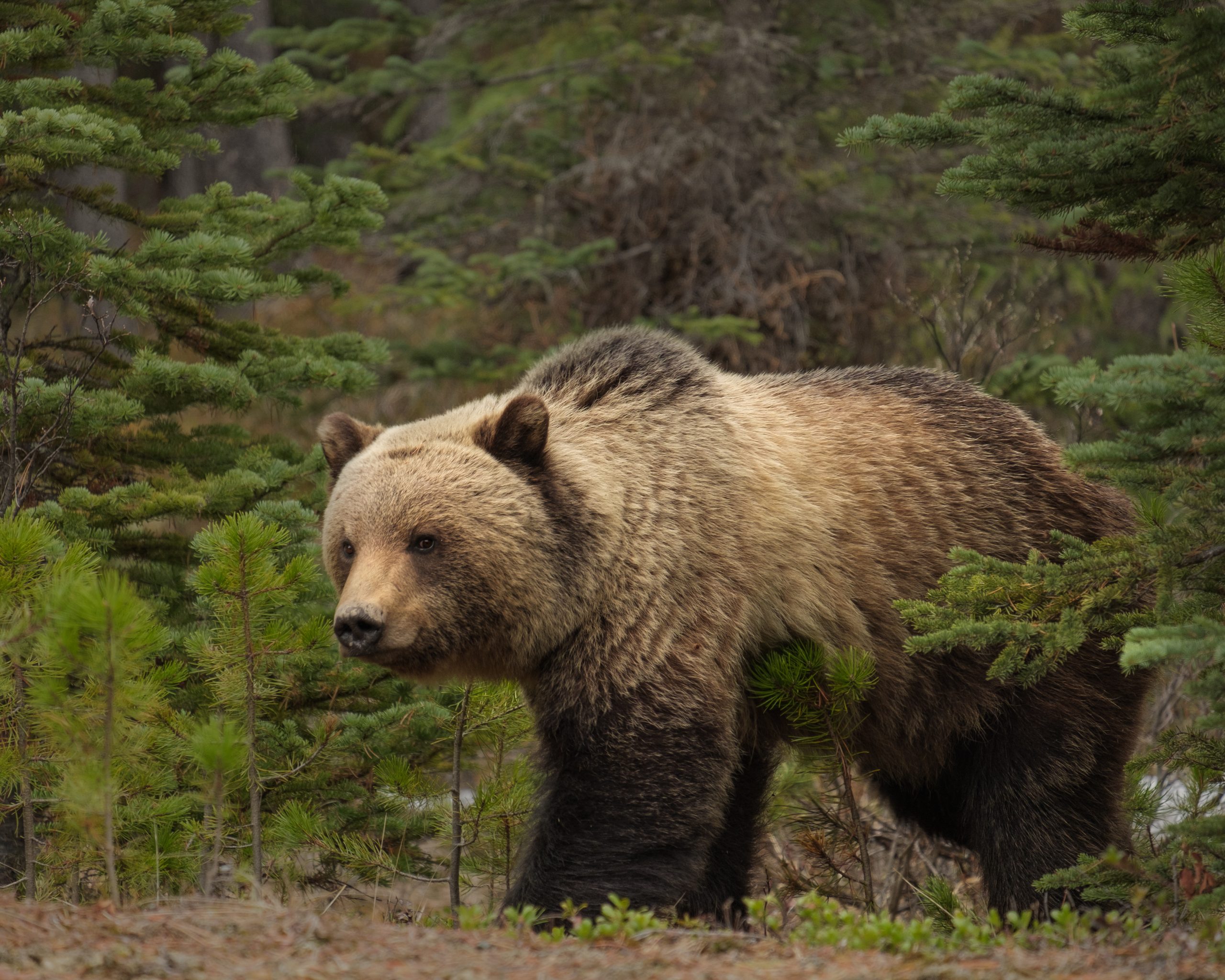
Meanwhile, viral footage has been released by a hiker that shows a large grizzly bear following him along a trail in the park.
Caught on camera by Isaac Shah, TikTok user @izzybob209, the bear begins to follow him at a reasonably close distance. Shah holds up his bear spray and continues to walk slowly away as he says:
“Still following me, just got to remain calm and don’t run, pepper spray at the ready.”
Shah has published a follow-up video from the safety of his car revealing that soon after the video ended the bear left the trail to get water from a nearby stream and he was left safe and well.
He acknowledges criticisms that he should have left the trail, but admits he was scared.
CBC News reported that Parks Canada said Isaac’s response was textbook perfect – he stayed calm, backed away slowly and didn’t run.
Bear safety
Banff National Park has published bear safety information on its social media channels. The main message is to try and avoid encounters in the first place. You can do this by:
- Making noise and traveling in groups
- Keeping your pets on a leash and under physical control
- Staying on official paths and trails
- Respecting closures and area restrictions
- If you encounter a dead animal, leaving the area immediately and reporting it to park staff
This article by Charlie Lyon was first published by Advnture on 23 May 2025. Lead Image: (Image credit: Getty).
Wildlife in catastrophic decline
The 73% decline in vertebrate wildlife populations during the last 50 years (mammals, birds, amphibians, reptiles and fish), is primarily driven by human activities that threaten biodiversity.
Habitat Loss and Degradation – human activities like deforestation, urbanization, and agriculture have led to the destruction and fragmentation of natural habitats, reducing the space and resources available for wildlife.
Pollution – air, water, and soil pollution from industrial activities, agriculture, and other sources can harm wildlife directly or indirectly by affecting their habitats and food sources.
Climate Change – changing weather patterns, rising temperatures, and sea levels are disrupting ecosystems and impacting species’ ability to adapt and survive.
Overexploitation of Resources – unsustainable hunting, fishing, and logging practices can lead to the depletion of populations and the loss of biodiversity.
Invasive Species – the introduction of non-native species can disrupt ecosystems, compete with native species, and threaten their survival.
 Donate
Help to protect wildlife by donating as little as $5. Our conservation partners spend at least 80 percent of the money raised on actual fieldwork rather than administration and fundraising.




Leave a Reply