
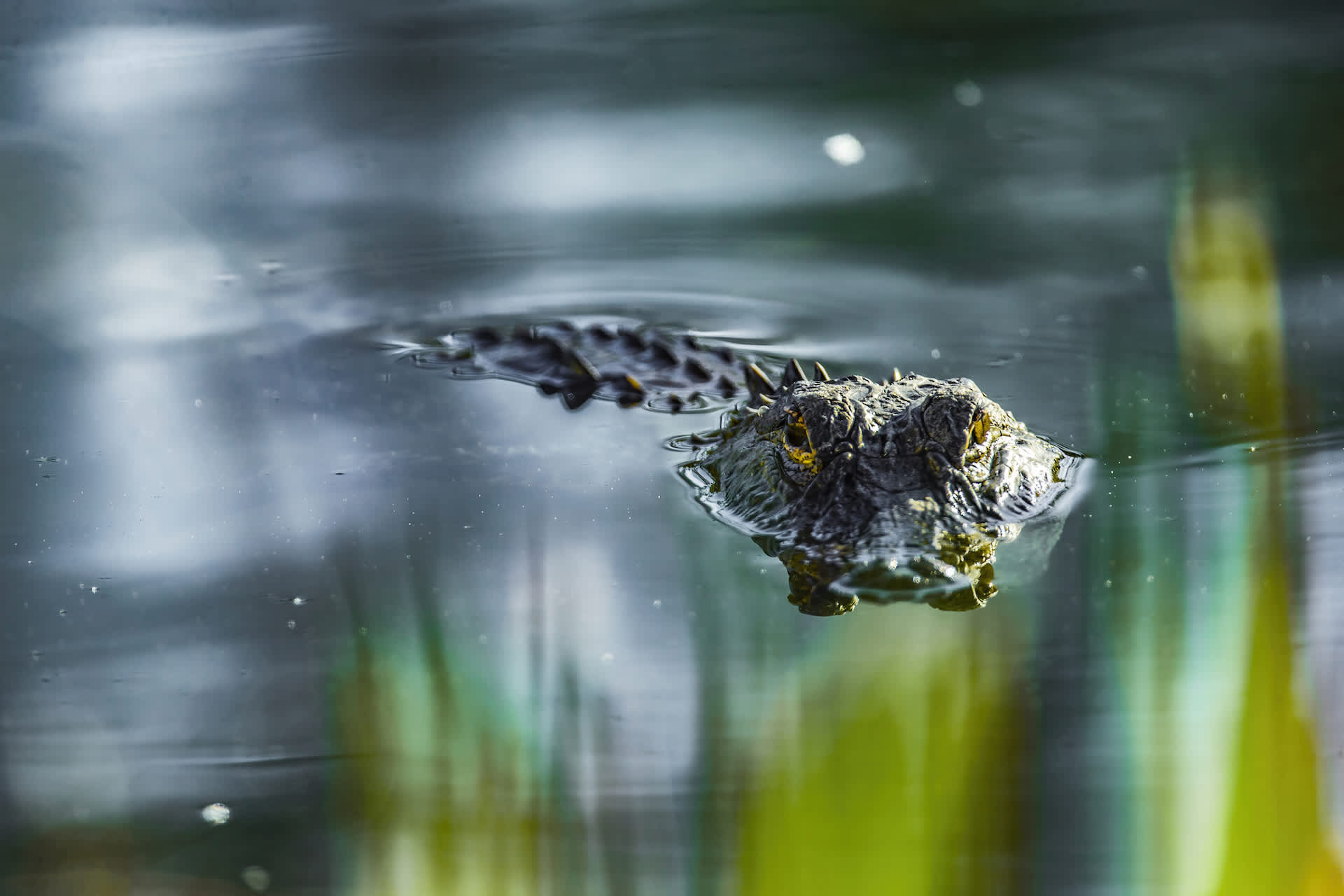
A GIRL has been attacked by a massive alligator while she played in the lake with her friends.
The children raced from the shallow waters to shore while screaming after the 12-year-old girl yelled out, “Something bit me!”

A giant alligator surfaced during the chaos at Lake Waccamaw in North Carolina on Friday evening, police said.
The Lake Waccamaw Police Department initially estimated the alligator that surfaced was six to seven feet long.
However, wildlife officials later identified the beast as a 12-foot-long male alligator.
The girl was left with about six stitches and multiple scratches on her leg but is otherwise fine, according to NBC affiliate WECT.
“It is unclear as to if the injuries were caused by a bite, or a claw. But they were definitely caused by the alligator,” LWPD said.
Authorities quickly captured and euthanized the gator, per protocol.
Wild photos showed North Carolina Wildlife Resources Commission officers tying up the massive animal before it was killed.
The alligator was acting unusually by being in the lake around people, according to NCWRC alligator biologist Alicia Wassmer.
“They very rarely get in the lake, especially during the daytime,” Wassmer told WECT.
She said there are roughly 600 alligators in the area and that they typically prefer murkier canal waters to the lake.
However, Wassmer said the alligator was behaving as one typically does when it’s fed.
Feeding alligators can encourage them to return to people-filled places like swimming spots.
“It can create issues like this down the road,” Wassmer said.
“Not necessarily for the person who’s feeding the alligator, but for other people.”
For that reason, feeding alligators is a felony in North Carolina that could land you with a $500 fine or even jail time.
Lake Waccamaw Police Department’s statement
Police issued the following statement after a 12-year-old girl was attacked by an alligator in a North Carolina lake on June 13:
We had an incident this evening involving an alligator and a minor child. There were multiple children playing in about 4′ of water when one exclaimed “something bit me!”. All the children were rushed out of the water and a 6′-7′ alligator surfaced in the area they had been.
The injuries sustained were serious but not life threatening in any way. It is also unclear as to if the injuries were caused by a bite, or a claw. But they were definitely caused by the alligator.
The alligator responsible for this incident has been neutralized.
NC Wildlife Resources Commission is on point with this situation and are doing an excellent job.
We remind our residents and visitors to remain ever vigilant and aware of their surroundings. In this particular case, the gator was never seen till after the incident occurred, and multiple adults were present.
Please respect the water and understand these animals are not tame or pets. If you see one, maintain a safe distance at all times. And exit the water if you are in it.
Thank you.
Source: Lake Waccamaw Police Department
Wassmer also warned against accidentally feeding alligators by dumping fishing bait or food scraps off docks or piers.
“Throwing fish scraps into the water or unused fish bait, especially at places like boat ramps,” Wassmet said.
“So, we discourage that as well as feeding other wildlife in the water.”
It’s unclear if the alligator was fed before it attacked the girl.
NCWRC hasn’t returned The U.S. Sun’s request for comment.
Lake Waccamaw Mayor Matt Wilson said it’s important for people to stay aware of their surroundings in the water as summer begins.
“People are coming in, tourists are coming in, we need to educate people,” Wilson told WECT.
“Be mindful of your surroundings, do not feed the alligators, do not dump your table scraps from supper from the night before in the lake.”
Officials added that alligator attacks are very rare in the area.
The girl’s close call came just weeks after a horrifying alligator attack where a 61-year-old woman was dragged out of a canoe and killed.
This article by Carsen Holaday was first published by The US Sun on 19 June 2025. Lead Image: American Alligator in Everglades National Park, Florida. James Abernethy/Future Publishing/Getty Images.
Wildlife in catastrophic decline
The 73% decline in vertebrate wildlife populations during the last 50 years (mammals, birds, amphibians, reptiles and fish), is primarily driven by human activities that threaten biodiversity.
Habitat Loss and Degradation – human activities like deforestation, urbanization, and agriculture have led to the destruction and fragmentation of natural habitats, reducing the space and resources available for wildlife.
Pollution – air, water, and soil pollution from industrial activities, agriculture, and other sources can harm wildlife directly or indirectly by affecting their habitats and food sources.
Climate Change – changing weather patterns, rising temperatures, and sea levels are disrupting ecosystems and impacting species’ ability to adapt and survive.
Overexploitation of Resources – unsustainable hunting, fishing, and logging practices can lead to the depletion of populations and the loss of biodiversity.
Invasive Species – the introduction of non-native species can disrupt ecosystems, compete with native species, and threaten their survival.
Help to protect wildlife by donating as little as $5. Our conservation partners spend at least 80 percent of the money raised on actual fieldwork rather than administration and fundraising.




Leave a Reply