
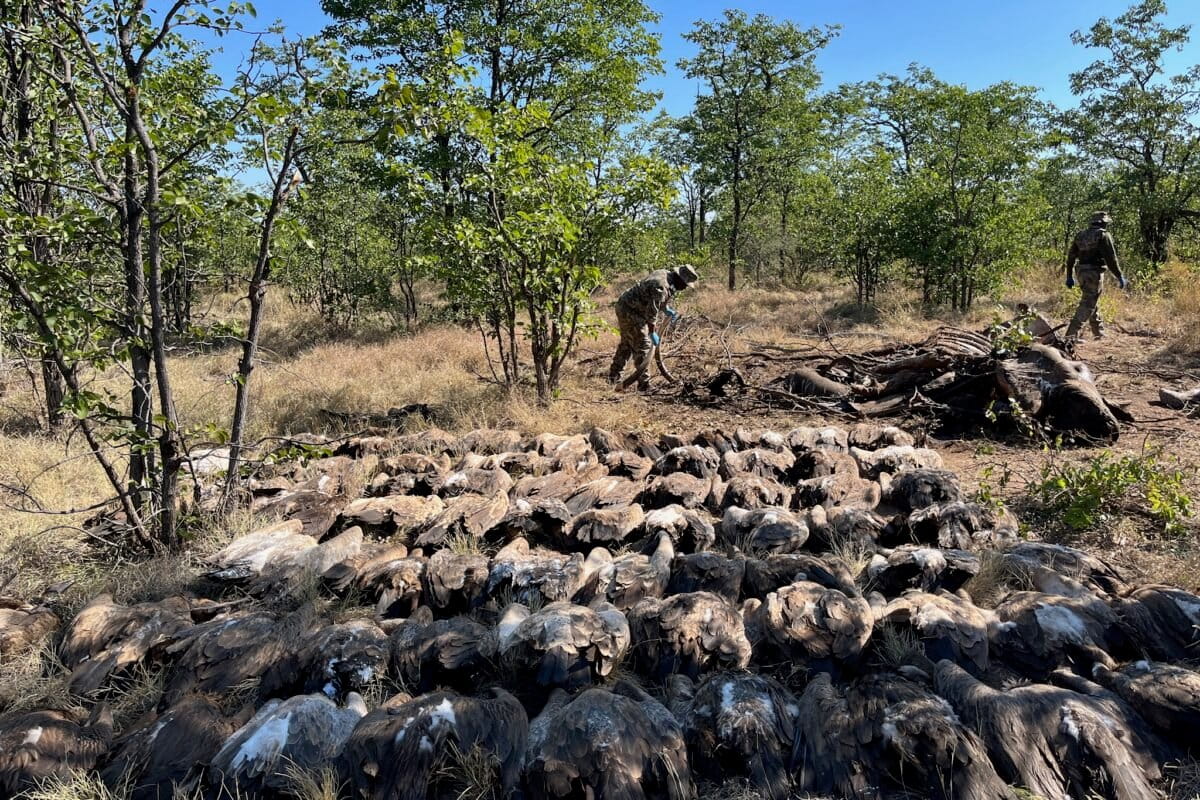
At least 123 vultures died in South Africa’s flagship national park after eating the carcass of a poisoned elephant, park authorities and an animal conservation group said on Thursday.
The elephant was reportedly laced with agricultural pesticides by poachers.
Another 83 vultures that were rescued from the site and transported for treatment by helicopter or a special vulture ambulance are still recovering.
The mass poisoning was one of the worst seen in the famous Kruger National Park in northern South Africa, said SANParks, the national parks agency.
Vultures are especially vulnerable to poisoning
Vultures are key to wildlife ecosystems because of the clean-up work they do, feeding on the carcasses of dead animals.
But that also makes them especially vulnerable to poisoning by poachers, either intentionally or as a result of the killing of other animals.
Hundreds of vultures typically feed on a single carcass.
The elephant had been poisoned by poachers in a remote part of the huge park to harvest its body parts for the illegal wildlife trade, SANParks and the Endangered Wildlife Trust said.
Many vulture species are endangered in Africa because of poisoning and other threats. The affected birds in Kruger included Cape vultures, endangered lappet-faced vultures and critically-endangered white-backed and hooded vultures.
Rangers face a daily battle against poachers
“This horrific incident is part of a broader crisis unfolding across southern Africa: the escalating use of poisons in wildlife poaching,” SANParks and the Endangered Wildlife Trust said in their joint statement.
“Poachers increasingly use agricultural toxins to target high-value species.”
The Kruger National Park covers approximately 20,000 square kilometres and is nearly twice the size of small countries like Jamaica and Qatar.
Rangers say they face a daily battle to guard species like rhinos, elephants and lions from poachers.
Vulture conservation organisation Vulpro, which was not involved in the rescue, said the poisoning came at the start of the breeding season.
Many other birds that weren’t found at the site could still be affected, it added.
This article by Rebecca Ann Hughes was first published by Euronews on 9 May 2025. Lead Image: Copyright AP2011.
Wildlife in catastrophic decline
The 73% decline in vertebrate wildlife populations during the last 50 years (mammals, birds, amphibians, reptiles and fish), is primarily driven by human activities that threaten biodiversity.
Habitat Loss and Degradation – human activities like deforestation, urbanization, and agriculture have led to the destruction and fragmentation of natural habitats, reducing the space and resources available for wildlife.
Pollution – air, water, and soil pollution from industrial activities, agriculture, and other sources can harm wildlife directly or indirectly by affecting their habitats and food sources.
Climate Change – changing weather patterns, rising temperatures, and sea levels are disrupting ecosystems and impacting species’ ability to adapt and survive.
Overexploitation of Resources – unsustainable hunting, fishing, and logging practices can lead to the depletion of populations and the loss of biodiversity.
Invasive Species – the introduction of non-native species can disrupt ecosystems, compete with native species, and threaten their survival.
 Donate
Help to protect wildlife by donating as little as $5. Our conservation partners spend at least 80 percent of the money raised on actual fieldwork rather than administration and fundraising.



Leave a Reply