
Also known as the ratel, the honey badger is famous for its seemingly fearless and aggressive attitude to other animals, even larger predators such as lions and leopards – but does the honey badger live up to this infamy, and if so, just why is it so aggressive?
What is a honey badger?
The honey badger is a medium-sized mammal in the mustelid family, the same groups that badgers, weasels and otters belong to.
How big are honey badgers?
It is the largest terrestrial mustelid found in Africa, measuring between 55-77cm in body length (with an additional 12-30cm long tail) and 23-28cm in shoulder height. Females are smaller than males, but the average weight can vary across its range.
It has 4cm-long claws and teeth that are able to crack a tortoise shell.

The honey badger was once thought to be a type of badger species and so was grouped by scientists in the Melinae subfamily with species such as the European badger. However, it’s since been found to be more closely related to the martens, and is now placed within its own subfamily, Mellivorinae.
Why are honey badgers so aggressive?
Despite their reputation as the world’s most fearless animals, honey badgers try to avoid trouble. I have seen them bolt for a hole after sniffing fresh lion or leopard tracks.
Honey badgers usually only attack when surprised by predators, which often happens when they are digging – with poor eyesight and their noses in the ground, they can be oblivious to their surroundings.
When startled they rush at their assailants, releasing a potent scent from their anal glands, rattling and standing tall with their hackles raised. This usually scares the predator away. Even if a badger is caught, its loose skin enables it to twist round and bite its attacker.
Please note that external videos may contain ads
How NOT to Keep Away from a Honey Badger’s Teeth | Deadly 60 | Earth Unplugged
Though honey badgers are named for their habit of raiding beehives, they mainly hunt rodents, reptiles and insect larvae, along with the occasional antelope calf, cheetah cub and eagle chick.
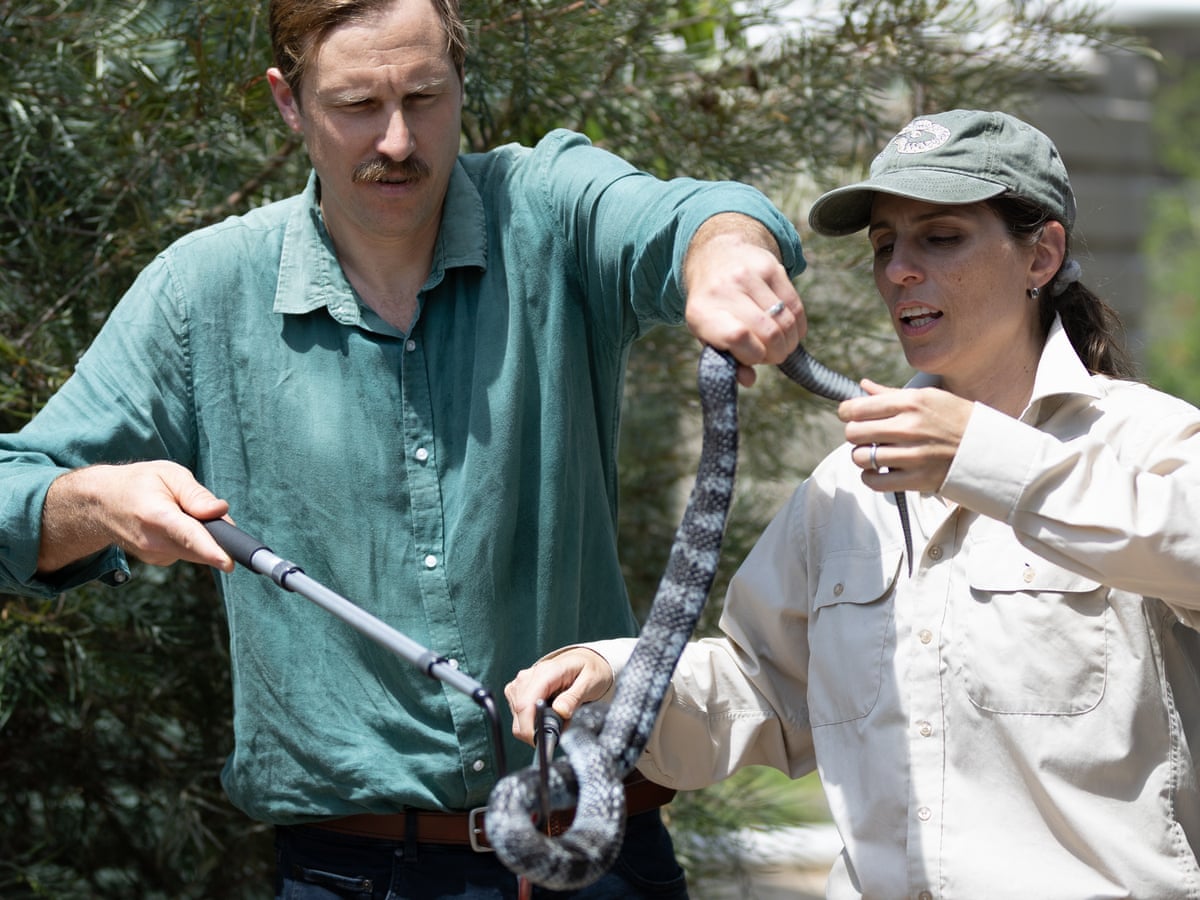
Many of their prey species are venomous, including the puff adder and Cape cobra, and the badgers are thought to develop some immunity to venom over a lifetime of bites and stings.
I encountered one individual that was bitten on the face by a puff adder. Despite a large swelling on his cheek, he was up and chasing snakes again just five hours later.
Where are honey badgers found?
The honey badger is a widespread mammal and is found in sub-Saharan Africa, southwest Asia and the Indian subcontinent. They are relative abundant within their range, but do come into conflict with humans, particularly farmers and beekeepers.
What do honey badgers eat?
The honey badger doesn’t have a particularly specialised diet. It is an omnivore, feeding on a wide range of foods including raiding beehives for both bee larvae and honey, as well as feeding on rodents, amphibians, birds, eggs, berries, roots and bulbs. It will even kill and eat black mambas, a highly venomous snake. The species will also steal food from other carnivores, or scavenge from kills.
Although it’s believed that the honeyguide bird guides honey badgers, this has not been proven.
Honey badgers can become pests to poultry farmers, able to gain access to even strongly built hen houses and undertaking surplus killing once inside.
There have been reports in India that the species dig ups human corpses.
Does anything eat honey badgers?
Honey badgers, particularly young ones, can be predated by larger predators such as lions, leopards and hyenas.
Are honey badgers clever?
It’s thought that honey badgers are relatively clever. In the video below, a clip from the BBC’s Weasels: Feisty and Fearless programme, a couple of captive honey badgers are put through their paces to determine if they are able to work out puzzles in order to access food.
Please note that external videos may contain ads
Are Honey Badgers Big-Brained? | Weasels: Feisty & Fearless | BBC Earth
What is the scientific name of the honey badger?
The scientific name of the honey badger is Mellivora capensis.
How long do honey badgers live for?
The lifespan for wild honey badgers is unknown, but in captivity, individuals have lived for 24 years.
Are honey badgers endangered?
Due to is wide distribution range and range in habitats, the honey badger is listed as Least Concern on the IUCN Red List. It was last assessed in 2015.
This article by Megan Shersby was first published by Discover Wildlife on 28 October 2025. Lead Image: Honey badger in South Africa. © Bridgena Barnard/Getty.
What you can do
Help to protect wildlife by donating as little as $5 – it only takes a minute!
Our conservation partners spend at least 90 percent of the money raised on actual fieldwork rather than administration and fundraising.





Leave a Reply