
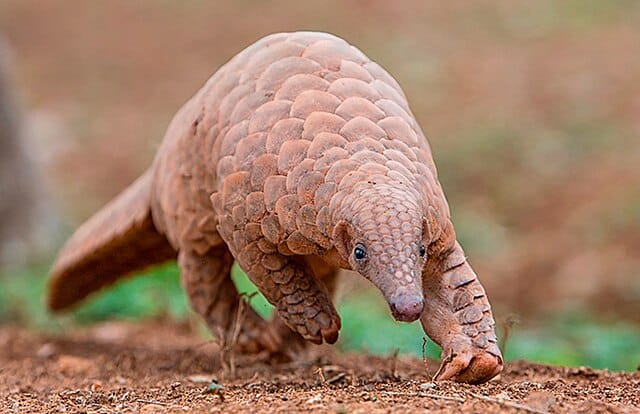
The pangolin is a unique creature – the nocturnal mammal is known for being mysterious.
Adorable but sturdy, it can roll up into a ball to protect itself with scaly armor, and lash its sharp tail out at predators.
Sadly, the pangolin is also one of the most vulnerable animals alive today. These shy, scaly creatures are one of the most trafficked mammals in the world.
According to the Center for Biological Diversity, seven species are in danger of extinction.
Thankfully, the U.S. Fish and Wildlife Service (USFWS) has proposed listing these seven pangolin species under the Endangered Species Act. This is a crucial first step, but we must make sure the agency follows through.
Sign the petition to urge USFWS to give these pangolin species the proper protections!
Hunted for their meat and scales, up to 2.7 million pangolins are often brutally killed and sold on the black market.
If approved, the move to protect more pangolin species would help shut down any remaining U.S. market for pangolin parts and strengthen law enforcement’s ability to prosecute wildlife traffickers.
There is no excuse for delay. The U.S. must uphold its responsibility to protect these animals and all endangered wildlife. We must ensure that the ESA is used to its full potential to protect not only U.S. species but also creatures like pangolins that are suffering due to global exploitation.
Don’t let these remarkable animals vanish in silence. Add your name to demand the U.S. Fish and Wildlife Service finalize endangered species protections for all seven pangolin species!

This article by Nicholas Vincent was first published by One Green Planet on 9 July 2025. Lead Image Credit :CameraBaba/Shutterstock.
Wildlife in catastrophic decline
The 73% decline in vertebrate wildlife populations during the last 50 years (mammals, birds, amphibians, reptiles and fish), is primarily driven by human activities that threaten biodiversity.
Habitat Loss and Degradation – human activities like deforestation, urbanization, and agriculture have led to the destruction and fragmentation of natural habitats, reducing the space and resources available for wildlife.
Pollution – air, water, and soil pollution from industrial activities, agriculture, and other sources can harm wildlife directly or indirectly by affecting their habitats and food sources.
Climate Change – changing weather patterns, rising temperatures, and sea levels are disrupting ecosystems and impacting species’ ability to adapt and survive.
Overexploitation of Resources – unsustainable hunting, fishing, and logging practices can lead to the depletion of populations and the loss of biodiversity.
Invasive Species – the introduction of non-native species can disrupt ecosystems, compete with native species, and threaten their survival.
Help to protect wildlife by donating as little as $5. Our conservation partners spend at least 80 percent of the money raised on actual fieldwork rather than administration and fundraising.




Leave a Reply