
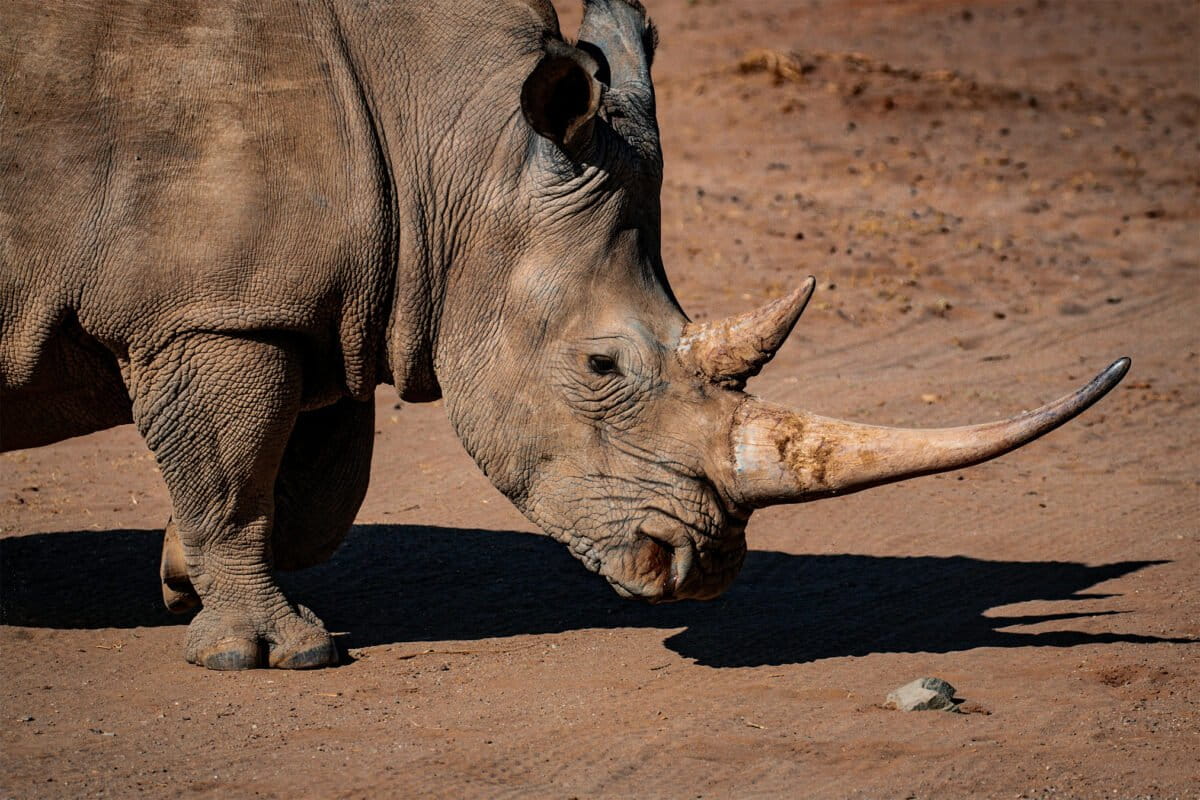
The ongoing crisis facing South Africa’s rhinos cannot be ignored. In the first three months of 2025 alone, 103 rhinos were killed, highlighting the threat posed by sophisticated poaching groups that exploit weaknesses in protection and enforcement. Rhinos are an iconic species. Their continued survival is under grave threat – especially for critically endangered species like the Javan, Sumatran, and Black rhinos.
Sign this petition to demand that the South African government allocate more resources toward cracking down on poaching syndicates and strengthening wildlife protection laws.
While there has been a decrease in poaching in KwaZulu-Natal, the crisis has only shifted to other areas, with South African National Parks seeing a shocking increase in rhino killings – 65 rhinos in just the first quarter of 2025.
Poaching syndicates are adapting to changes in tactics, using advanced methods to smuggle rhino horns and bypass security measures. This has resulted in devastating losses for rhino populations.
Local wildlife agencies and non-governmental organizations (NGOs) are working tirelessly on the frontlines, but they cannot do it alone. The survival of these iconic creatures depends on us, and now is the time to act.
Sign this petition today and demand stronger protections for rhinos in South Africa!

This article by Nicholas Vincent was first published by One Green Planet on 12 June 2025. Lead Image Credit :Rudi Hulshof/Shutterstock.
Wildlife in catastrophic decline
The 73% decline in vertebrate wildlife populations during the last 50 years (mammals, birds, amphibians, reptiles and fish), is primarily driven by human activities that threaten biodiversity.
Habitat Loss and Degradation – human activities like deforestation, urbanization, and agriculture have led to the destruction and fragmentation of natural habitats, reducing the space and resources available for wildlife.
Pollution – air, water, and soil pollution from industrial activities, agriculture, and other sources can harm wildlife directly or indirectly by affecting their habitats and food sources.
Climate Change – changing weather patterns, rising temperatures, and sea levels are disrupting ecosystems and impacting species’ ability to adapt and survive.
Overexploitation of Resources – unsustainable hunting, fishing, and logging practices can lead to the depletion of populations and the loss of biodiversity.
Invasive Species – the introduction of non-native species can disrupt ecosystems, compete with native species, and threaten their survival.
Help to protect wildlife by donating as little as $5. Our conservation partners spend at least 80 percent of the money raised on actual fieldwork rather than administration and fundraising.




Leave a Reply