
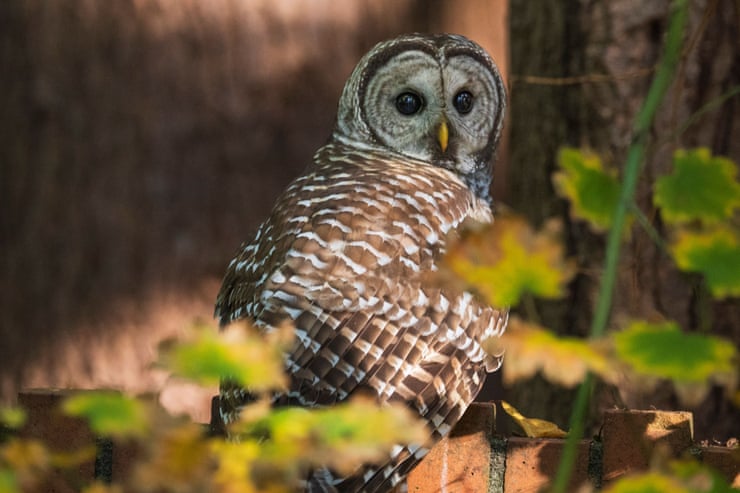
The U.S. Senate has declined to stop a controversial U.S. Fish and Wildlife Service (USFWS) plan that would see nearly half a million barred owls killed in the Pacific Northwest to protect their threatened cousins, the northern spotted owls. According to The Guardian, the vote to block the plan failed 25–72, allowing the large-scale culling to move forward.
Barred owls, known for their adaptability and intelligence, have gradually expanded west from their native range in eastern North America.
As a result, they’ve begun outcompeting the smaller, more fragile northern spotted owls — a species already struggling after decades of logging and habitat loss in the Pacific Northwest.
The USFWS argues that removing barred owls is essential to prevent the extinction of the spotted owl, but animal welfare groups call the plan “colossally reckless,” noting the staggering number of birds that would be shot under federal direction.
Critics say the program highlights a deeper failure in environmental stewardship. Instead of addressing the real issue — human-driven habitat destruction — the government is now attempting to “play God” by controlling wildlife populations through lethal force.
Many conservationists argue that this approach undermines the very principles of coexistence and compassion that should define modern environmental policy.
The plan’s Support from the logging industry has only deepened concerns that profit, not preservation, is guiding decision-making.
While the USFWS insists the cull is backed by a decade of research, many see it as a grim symbol of how disconnected humanity has become from the natural balance of the Earth.
Protecting biodiversity means rethinking our relationship with nature — not killing animals to fix the problems we created.
True Conservation requires protecting forests, embracing plant-based choices, and choosing compassion over convenience.
This article by Nicholas Vincent was first published by One Green Planet on 4 November 2025. Lead Image Credit: KJ Quraish/Shutterstock.
What you can do
Help to protect wildlife by donating as little as $5 – it only takes a minute!
 Donate
Our conservation partners spend at least 90 percent of the money raised on actual fieldwork rather than administration and fundraising.





Leave a Reply