
Two traffickers of rhino horns have been sentenced by a South African court in what police said was the world’s largest such case, partly bringing to an end an almost two-decade legal saga.
Dawie Groenewald and Tielman Erasmus had faced more than 1,700 charges ranging from illegally hunting and dehorning rhinos to racketeering and money laundering.
Groenewald, described by South African police as the mastermind of the enterprise, was handed a 2m rand (£92,000) fine or four years’ imprisonment after reaching a plea deal with the state.
His co-accused was fined 100,000 rand or three years in prison, said the Directorate for Priority Crime Investigation, also known as the Hawks unit.
South Africa has about a third of the world’s critically endangered black rhino population, according to the International Rhino Foundation (IRF). It also has more than 75% of all southern white rhinos, whose global population dropped 10% to fewer than 16,000 in 2024.
The country is plagued by rhino horn poaching, accounting for 81% of poaching cases in Africa in 2024, according to the IRF.
Rhino horn is used in traditional Chinese medicine but has no health benefits for humans. While up-to-date estimates are hard to come by, a 2022 research paper suggests it can fetch tens of thousands of dollars a tonne on the black market.
Groenewald and his brother Janneman were accused by the US justice department in 2014 of selling illegal rhino-hunting trips to Americans under false pretences.
South African police had first started investigating the case in 2007. In 2010, 11 people were arrested, they said, including “professional hunters, veterinary surgeons, a helicopter pilot and general workers involved in an organised criminal enterprise”.
However, more than 15 years of delays followed, amid legal challenges, including in the constitutional court. Two of the original 11 accused died while the case was in progress, as well as 10 of the state’s 185 witnesses, while others emigrated.
The case against three others, Karel Toet, Marisa Toet and Koos Pronk, was postponed to 20 August, police said.
Last year a South African rhino farmer, John Hume, was charged with five others with being part of a horn trafficking syndicate. Hume bred white rhinos on his farm and campaigned for horn trading to be legalised and regulated in South Africa. He had about 2,000 rhinos on his farm when he sold it in 2023, claiming he could no longer afford to run it.
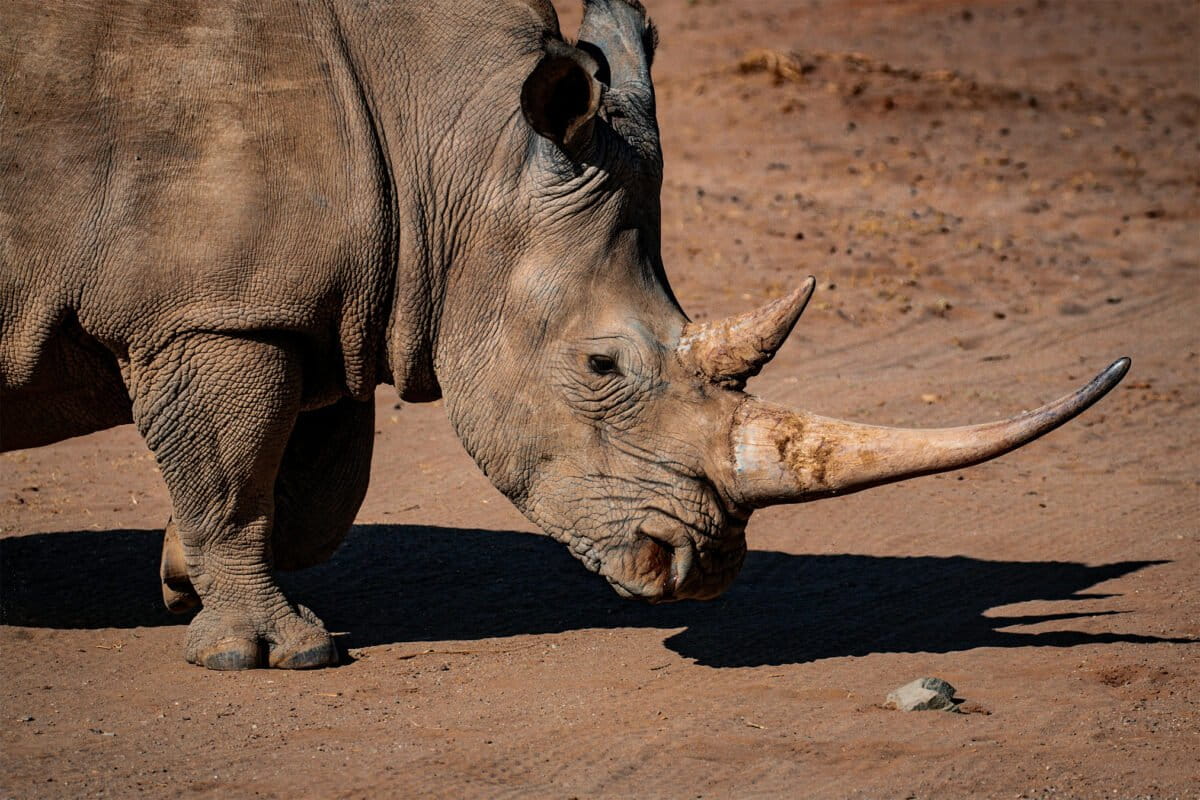
This article by Rachel Savage was first published by The Guardian on 18 June 2026. Lead Image: Rhinos at a game reserve near Hammanskraal in South Africa. Photograph: Alfonso Nqunjana/AP.
Make a donation
If you believe in our good work, please support us in any way you can. Your generosity allows us to work to protect wildlife and habitats. Thank you!



Leave a Reply