
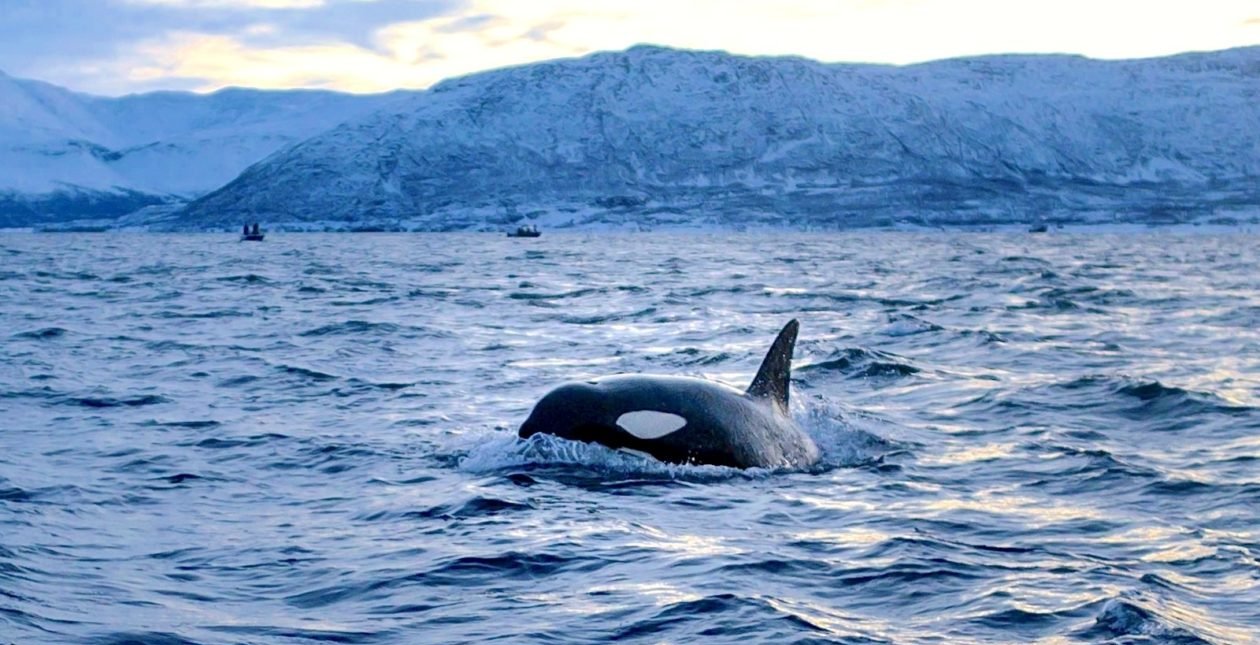
In a new study of large whales in East Greenland, researchers have documented a dramatic biodiversity shift: minke whales, fin whales and humpback whales, once rarely seen in these waters, have now become abundant.
The research, conducted by Mads Peter Heide-Jørgensen from the Greenland Institute of Natural Resources and colleagues in Greenland, Denmark and Iceland, presents a striking example of how biodiversity can change as sea temperatures increase and sea ice dwindles.
As part of the study, published in Frontiers in Marine Science, researchers compared numbers of whales from 1987 to 2025 using observations from sea and air, tagging data and information from Inuit hunters.
The team developed a mathematical model to find patterns in the data sets and highlighted exceptionally high densities of whales, including spectacular aggregations of between 20 and 50 humpbacks in 2025.
In 2024 alone, at least 4,000 humpback whales, 6,000 fin whales and 6,000 minke whales visited the Greenland Sea, reports the study.

The study also highlights the need for fast-paced climate adaptation in marine management. Fisheries management needs to respond to shifting locations of fish populations, and national marine conservation measures, such as the designation or expansion of Marine Protected Areas and Important Marine Mammal Areas, may need to be considered for newly important biodiversity hotspots.
Whilst multispecies feeding frenzies and humpback whale aggregations may sound wonderful, they are another reminder of the impacts of climate change.
This article by Fiona Gell was first published by Discover Wildlife on 20 August 2026.
What You Can Do
Subscribe to the vital work of our conservation partners for as little as $5 per month. All subscriptions are donated to wildlife charities.
Our conservation partners use at least 80 percent of the money raised on actual fieldwork rather than administration and fundraising.




Leave a Reply