
As humans encroach further into ecosystems, people and wildlife are brought into closer proximity. One potential consequence is an increased risk of pathogens jumping from animals to humans, prompting researchers to explore the dynamics of how viruses circulate in nature and how best to prevent the risk of this transmission.
New research from Thailand identified genetic material belonging to Betacoronaviruses, a genus of viruses that includes the strains responsible for Covid-19, SARS and MERS, within commercially available agricultural products, raising concerns over a general lack of safety protocols to protect harvesters and handlers from exposure.
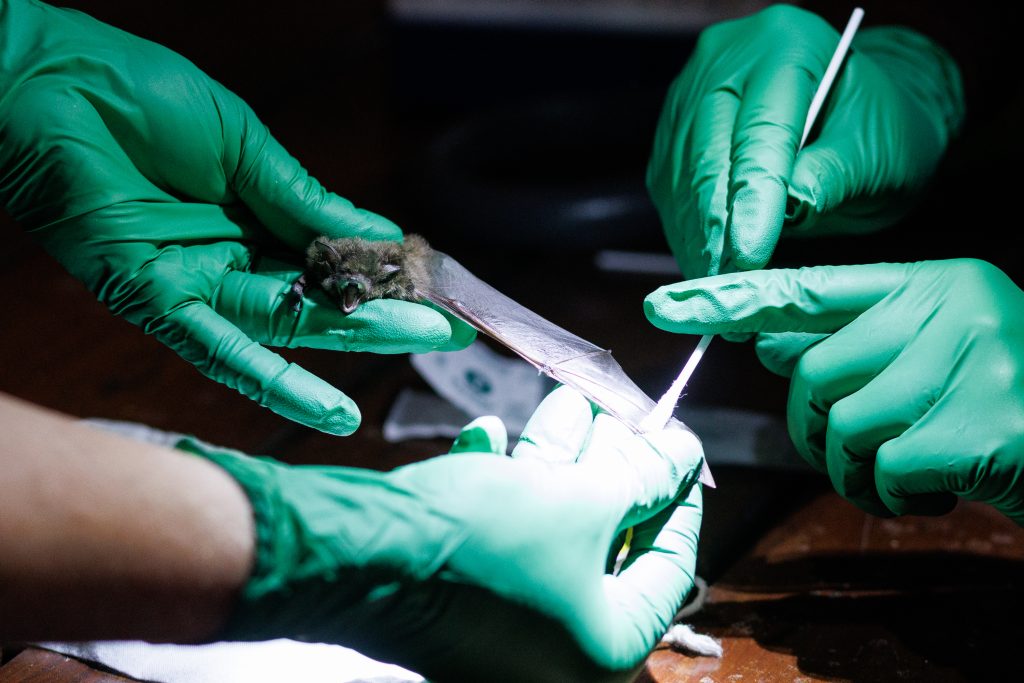
In the study, published in PLOS One, researchers screened 41 samples of bat guano fertilizers commonly sold in Thai markets for the presence of coronaviruses. While all the samples were from products bought in Thailand, the researchers couldn’t determine the exact origins of the guano contained in each product, which may have been from outside the country.
Two of the samples tested positive for Alphacoronaviruses, another genus of coronaviruses, and one tested positive for Betacoronaviruses. Genetic analysis showed the Betacoronavirus sample was closely genetically related to the sarbecovirus subgenus, the group that includes the Covid-causing pathogen, SARS-CoV-2.
Importantly, the researchers note the viral strains detected are not known to infect humans. Moreover, they only detected a fragment of viral RNA, the genetic blueprint of viruses, and did not fully isolate a live virus in the samples. As a result, they couldn’t definitively confirm the genetic material detected is capable of posing risks to human health.
Nonetheless, the materials detected indicate that viruses present in bat populations might be able to survive outside of the immediate vicinity of bat roosts and within publicly available agricultural products, the study says.

“The most surprising thing was that these viruses don’t just stay in the caves,” Thachawech Kimprasit, a medical microbiologist at Mahidol University in Bangkok and senior author of the study, told Mongabay in an interview. “Their material can be found in commercial end products.” Further research will be required to confirm whether live, intact viruses can survive, he added.
While the genetic material detected poses no risk to human health, the study’s findings highlight an urgent need for enhanced biosecurity measures and safety protocols throughout the fertilizer supply chain to protect guano harvesters, agricultural staff and processing personnel from exposure to pathogens, Thachawech said.
“Biosecurity management of bat guano fertilizers might require heat treatment or chemical treatment to remove the virus raw genetic material,” he said. “We should also focus on maintaining safe ecological boundaries between bats and people.”
Minimize human disturbance of bat roosts
Bats, like many other species of mammal, are natural reservoirs for zoonotic viruses such as Betacoronaviruses and are capable of hosting pathogens without falling ill themselves owing to their specialized immune systems.
Since Betacoronaviruses have been known to infect humans, the researchers used rapid genetic sequencing techniques to investigate the most likely natural host of this guano sample. They identified the croslet horseshoe bat (Rhinolophus coelophyllus), an insectivorous and cave-roosting species widely distributed across mainland Southeast Asia, from Myanmar, Thailand and Laos to Peninsular Malaysia, as the most likely host.
“The real issue is not the bats themselves, but human disruption of their habitats, which increases the risk of disease transmission,” said Thura Soe Min Htike, a conservation officer at the Nature Conservation Society–Myanmar, who was not involved in the Thailand study.

Previous research has found increased exposure to coronaviruses that circulate in bat populations among communities who depend on forest-related livelihoods, such as logging, hunting or harvesting forest products.
Prior studies in Southeast Asia have also underscored the need for stricter bat guano harvesting safety protocols in rural areas to reduce the risk of viral spillover to humans and to minimize disturbance of important bat roost sites that are key to species’ survival.
Maintaining healthy populations of bats is vital to wider ecosystem health. Bats control insect populations and pollinate plants, processes that have been shown to enhance yields of important crops, such as durian, rice and cocoa, that provide vital income for many rural households.
The new study from Thailand is a clear example of how virology research can help scientists better predict, prevent and manage future zoonotic disease risks, Thura told Mongabay in an email. “People have had exposure to bat guano for a long time,” he said, adding that rural communities have used bat guano from extensive cave systems found across Southeast Asia to fertilize their farmland for generations.
The new findings, however, accentuate the need for systematic measures to reduce the risk of contamination and spillover from these practices. Outreach programs in remote areas where household use is common will be key, he says, “Health education among rural communities is critical.”

Origins and infection risk require deeper investigation
According to Thachawech, the best way to minimize the risk of human exposure to viruses present in wild animal populations is to follow the widely recognized “One Health” approach, which recognizes the interconnectedness of human, animal and environmental health. “People’s health and environmental health is the same health,” he said. When it comes to bat roosts, this means minimizing disturbance: “There’s no need to disturb bat roosts.”
While the study clearly indicates the presence of Betacoronavirus genetic material in commercial fertilizer sold in Thailand, the research has limitations, Thachawech noted. The study’s relatively small sample size of 41 limits the team’s ability to draw conclusions about how viral loads circulate in products across the wider region, he said. The unclear origins of the guano contained in each fertilizer sample also makes it impossible to determine the geographic origin of the detected virus.
Little is known about whether the Betacoronavirus identified in the study could possibly infect humans, Thachawech said. This would require it to be able to bind to human cells, replicate in them and transmit between people. As a next step, the team aims to analyze more fertilizer samples to isolate and sequence live Betacoronavirus genomes to better understand the infection risk and full public health implications.
Thachawech and his colleagues also plan to measure viral antibody levels in people living near bat roosts and well-known guano harvesting sites to investigate how much exposure communities have had to zoonotic viruses that may be circulating in local bat populations.
In the meantime, the researchers urge fertilizer companies, regulators and farmer extension groups to introduce better safety and quality standards. Protective clothing, including masks and gloves, should be essential; industrial processing should take place under biosecure conditions; and screening of all wildlife-derived products for the presence of zoonotic viruses should be an ongoing practice, they say.
As the authors say in their study: “Although the precise origin of the detected virus remains undetermined, proactive strategies should be prioritized to mitigate future zoonotic threats and safeguard public health.”
Citations:
Eby, P., Peel, A. J., Hoegh, A., Madden, W., Giles, J. R., Hudson, P. J., & Plowright, R. K. (2022). Pathogen spillover driven by rapid changes in bat ecology. Nature, 613(7943), 340-344. doi:10.1038/s41586-022-05506-2
Suwannasing, R., & Kimprasit, T. (2026). Bat guano fertilizer as a source of Betacoronavirus: First molecular evidence linking Rhinolophus coelophyllus to viral reservoirs in Thailand. PLOS One, 21(3), e0344265. doi:10.1371/journal.pone.0344265
Evans, T. S., Tan, C. W., Aung, O., Phyu, S., Lin, H., Coffey, L. L., … Thu, H. M. (2023). Exposure to diverse sarbecoviruses indicates frequent zoonotic spillover in human communities interacting with wildlife. International Journal of Infectious Diseases, 131, 57-64. doi:10.1016/j.ijid.2023.02.015
Aung, M. M., Htike, T. S., Phwe, N. P., Aung, O., Aung, P. P., Yae, W. M., … Evans, T. S. (2026). Limestone Karst ecology and anthropogenic activities associated with cave-dwelling bats of southern Shan state, Myanmar. Global Ecology and Conservation, 67, e04071. doi:10.1016/j.gecco.2026.e04071
Ruiz-Aravena, M., McKee, C., Gamble, A., Lunn, T., Morris, A., Snedden, C. E., … & Plowright, R. K. (2022). Ecology, evolution and spillover of coronaviruses from bats. Nature Reviews Microbiology, 20(5), 299-314. doi:10.1038/s41579-021-00652-2
Bumrungsri, S., Sripaoraya, E., Chongsiri, T., Sridith, K., & Racey, P. A. (2009). The pollination ecology of durian (Durio zibethinus, bombacaceae) in southern Thailand. Journal of Tropical Ecology, 25(1), 85-92. doi:10.1017/s0266467408005531
Wanger, T. C., Darras, K., Bumrungsri, S., Tscharntke, T., & Klein, A. (2014). Bat pest control contributes to food security in Thailand. Biological Conservation, 171, 220-223. doi:10.1016/j.biocon.2014.01.030
Maas, B., Clough, Y., & Tscharntke, T. (2013). Bats and birds increase crop yield in tropical agroforestry landscapes. Ecology letters, 16(12), 1480-1487. doi:10.1111/ele.12194
This article by Carolyn Cowan was first published by Mongabay on 28 July 2026. Lead Image: A croslet horseshoe bat (Rhinolophus coelophyllus), the most likely host of the Betacoronavirus detected in the study.. Image by Ian Dugdale via Wikimedia Commons (CC BY 4.0).
What You Can Do
Help to save wildlife by donating as little as $5 – It only takes a minute.




Leave a Reply