
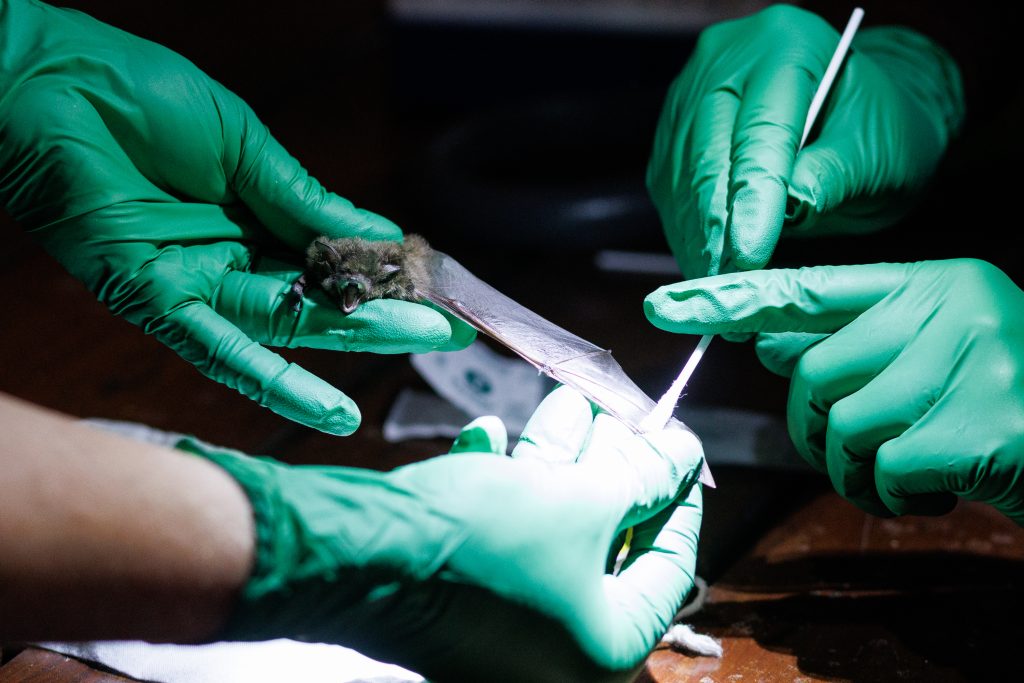
A vampire bat’s habit of regurgitating some of its bloody stomach contents to hungry roost-mates is a textbook example of reciprocal altruism – “I’ll scratch your back if you scratch mine.”
But it now seems that this sort of co-operation is more subtle than simple tit-for-tat.
Vampire bats are most likely to share their blood meals with close relatives, but they also donate food to unrelated individuals at risk of starvation.
When biologists split up family members within a roost, bats were most likely to cope with lean times if they had donated blood to many non-relatives in the past.
Feeding non-kin expands a bat’s social network, making it more likely that it will itself be helped in times of trouble.
The University of Maryland’s Gerald Carter, who led the research, writes on his blog that, like human friendships, vampire bats’ social connections might be based on their overall quality, rather than whether a particular individual co-operated during the last encounter.
Source Proceedings of the Royal Society B
This article by Stuart Blackman was first published by Discover Wildlife on 24 October 2025.
What you can do
Help to protect wildlife by donating as little as $5 – it only takes a minute!
 Donate
Our conservation partners spend at least 90 percent of the money raised on actual fieldwork rather than administration and fundraising.




Leave a Reply