
Dashcam footage of a truck driver hitting two baby kangaroos in broad daylight has sparked a fierce debate over high-speed wildlife encounters.
The clip first aired on Australian program Outback Truckers five years ago and showed trainee driver Kylie Hornick behind the wheel of a motortruck under the supervision of an instructor.
A kangaroo and two joeys suddenly emerged directly in her path.
‘Keep it straight, keep it straight,’ the instructor repeatedly said as the adult kangaroo narrowly escaped the fast-moving truck.
A loud thud was heard as the two joeys disappeared under the hood of the truck.
‘Yuck!’ Hornick said.
‘I hate that sound but I’m not going to jeopardize oncoming traffic [and] our lives for one kangaroo.’
The clip resurfaced this week and was reposted by Macquarie Driving School, a heavy vehicle training company in Australia which educates and raises awareness about the hazards of wildlife collisions Down Under.

‘Imagine this: You’re driving a heavy truck at high speed on a busy highway. Suddenly, two baby kangaroos jump onto the road,’ the company captioned the footage.
The school advised swerving or breaking suddenly would only endanger road users while staying on course was ‘heartbreaking, but it may be the safest option’.
One YouTube viewer wrote: ‘Don’t matter what animal mate, never swerve to avoid, and you won’t be touching the break at that speed for one either.’
Doing so may have been particularly perilous, given a pickup truck was driving at a fast speed in the opposite direction
‘Situations like these are part of the job,’ the school wrote.
While many viewers – including a number of truck drivers – agreed the trainee had done the right thing, some accused her of driving recklessly.
‘If you slow down, you won’t jeopardize anyone,’ one commented.
Another described the incident as ‘just awful,’ claiming she should have slowed down.
One man caused a particular stir when he wrote: ‘Pro tip – if you take your big hoof off the accelerator the vehicle will actually slow down.’
A woman replied: ‘Ever driven a big rig? With a comment like that it’s a firm no!’ while another said: ‘Slowing down a road train with about 20m warning… Good luck.’
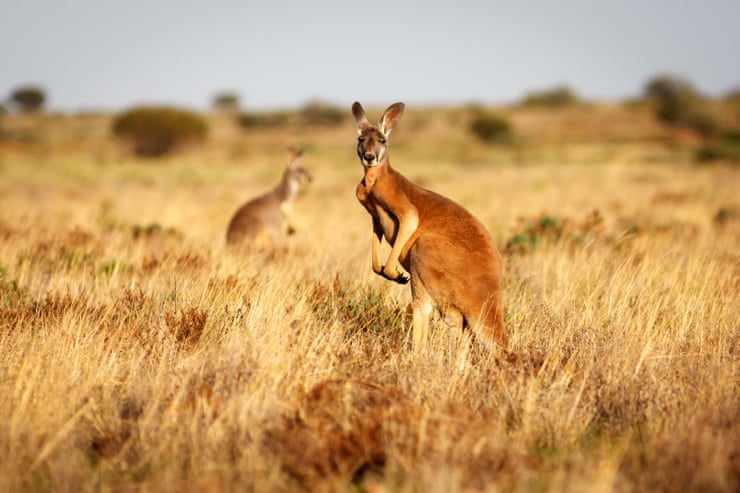
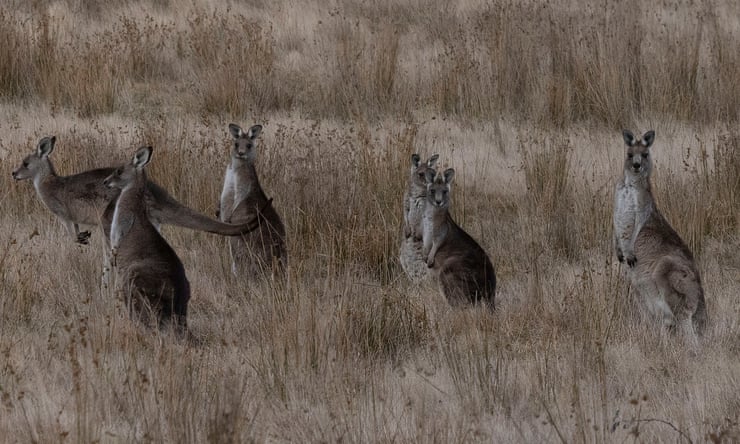
Kangaroos account for the vast majority of wildlife collisions in Australia.
About 12,880 animal collision insurance claims were lodged with Australia’s National Roads And Motorists’ Association in 2023, 85 per cent of which involved kangaroos.
Animal welfare group WIRES advises motorists to stop and check on the welfare of injured animals if it is safe to do so following a collision.
‘If the animal is alive and injured call WIRES or your local wildlife rescue service,’ campaign manager Kristie Newton said.
‘If the animal has died due to road trauma – especially if it is a kangaroo – check if it is a female and if there’s a joey(s) in her pouch or around her.’
This article was first published by The Daily Mail on 25 July 2025.
Wildlife in catastrophic decline
The 73% decline in vertebrate wildlife populations during the last 50 years (mammals, birds, amphibians, reptiles and fish), is primarily driven by human activities that threaten biodiversity.
Habitat Loss and Degradation – human activities like deforestation, urbanization, and agriculture have led to the destruction and fragmentation of natural habitats.
Overexploitation of Resources – hunting, fishing and wildlife trafficking lead to the depletion of populations and the loss of biodiversity.
Invasive Species – the introduction of non-native species disrupt ecosystems, compete with native species, and threaten their survival.
Pollution – air, water, and soil pollution from industrial activities, agriculture, and other sources harm wildlife directly or indirectly by affecting their habitats and food sources.
Climate Change – changing weather patterns, rising temperatures, and sea levels are disrupting ecosystems and impacting species’ ability to adapt and survive.
Help to protect wildlife
Help to protect wildlife by donating as little as $5 – it only takes a minute!
Our conservation partners spend at least 90 percent of the money raised on actual fieldwork rather than administration and fundraising.




Leave a Reply