
This year, there has been a noticeable increase in visitors making dangerous decisions in America’s national parks. Some incidents are harmless enough, while others—including a case where two park visitors narrowly avoided being gored by an angry bison—cross a line into genuinely dangerous territory that could cost someone their life.
That’s exactly what happened in early October at Yellowstone National Park in Wyoming, when a visitor chose to walk toward a wolf pack as bystanders watched in horror. Here’s what happened, and what the National Park Service wants travelers to know about getting too close to wild animals.
A Man Risked His Life By Approaching A Wolf Pack In Yellowstone National Park
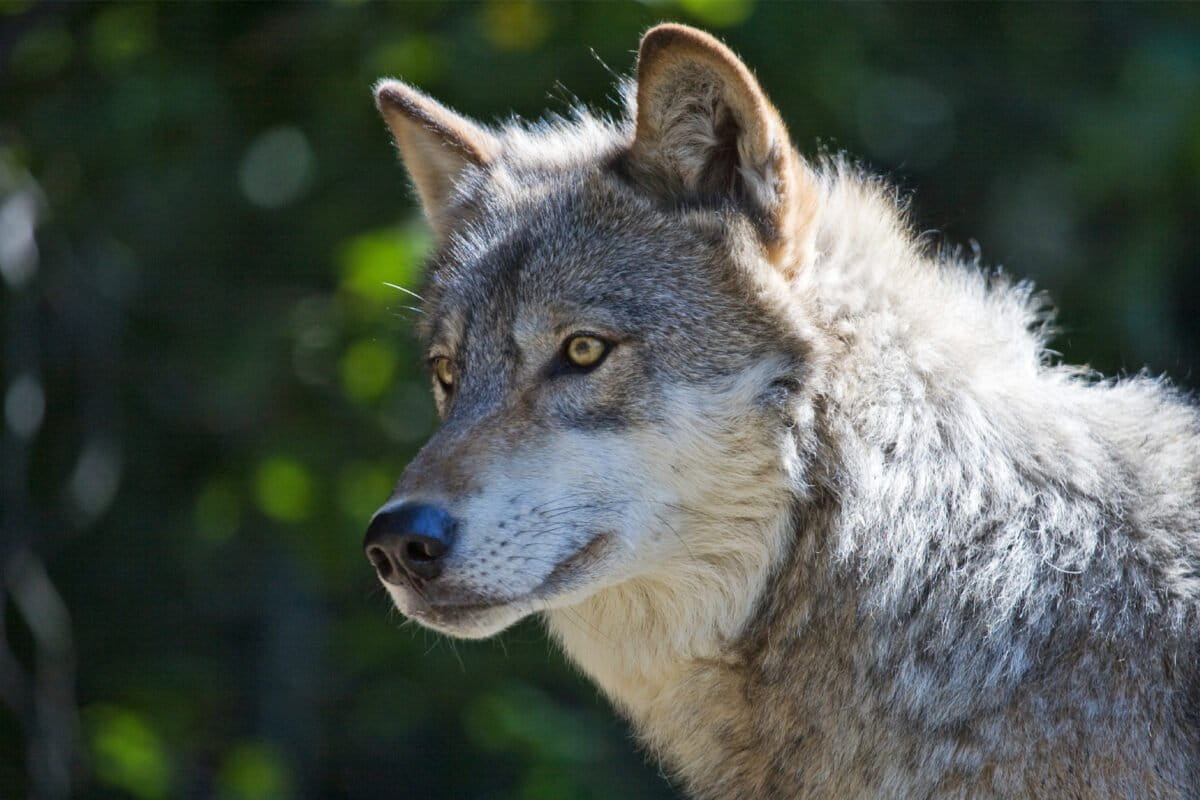
Witnesses at Yellowstone National Park were shocked last month when a man wearing a white scarf walked across an open field and headed directly toward a pack of black wolves. Bystanders filmed the encounter as the wolves moved toward him.
At first, the man seemed to be moving away from the animals. But as the wolves continued closing in, he stepped toward them, narrowing the distance to only a few feet. The group then disappeared into a nearby ravine, leaving onlookers to fear the worst.
The wolves eventually dispersed, and the man later reappeared, behaving erratically enough for bystanders to believe he was under the influence of some sort of drug.
Yellowstone National Park Fans Had Mixed Reactions On The Man’s Behavior

The video was later shared in the Facebook group Yellowstone National Park: Invasion of the Idiots, where commenters had mixed reactions. Some believed the man may not have realized the wolves were there or may have stumbled into the situation unintentionally.
They wrote:
“I think the issue with this video is not that this person got close to the wolves. Most likely, they did not know they were there. The issue is that the person was moving away from them while they were approaching.”
“Is it possible he was out walking and the wolves came upon him? I’d have to know for sure before I pass judgment.”
“How do you all know that he wasn’t coming back from a hike and ran into this pack? Last I knew, it wasn’t illegal to hike in Yellowstone. He looks like he did everything right to get back to his vehicle.”
However, most commenters criticized the man’s behavior, saying it was a miracle he made it out unscathed:
- “How stupid can stupid be?????????”
- “What a fool. You can see he thinks he’s above everyone else.”
- “Oh my gosh, crazy. He is lucky to be alive and not lunch.”
- “Dude survived off aura alone cuz it certainly wasn’t intelligence keeping him alive.”
So what does the National Park Service say about situations like this, and what should visitors do when wildlife gets too close?
What The National Park Service Says About Getting Too Close To Wildlife
According to the National Park Service, wolves rarely pose a threat to humans. While Yellowstone has never recorded a wolf attack on a visitor, incidents in other regions show that it can still happen when animals become habituated. This is because, when wolves learn that areas like campgrounds, picnic sites, and roads are potential food sources, they can become aggressive.
To stay safe while visiting the park, officials urge visitors to follow several guidelines:
- Never feed a wolf or any other wildlife.
- If you see a wolf, do not approach it.
- Never leave small children unattended.
- Keep dogs leashed.
If a wolf comes too close, rangers advise staying still rather than running. Visitors should watch the animal and make themselves appear larger by waving their arms or opening a jacket. If the wolf keeps approaching, throwing objects, shouting, or using bear spray may help deter it.
On a broader level, the National Park Service recommends specific viewing distances for wildlife: about 75 feet for deer and most smaller animals, and between 100 and 150 feet for predators such as wolves and bears. However, as the recent Yellowstone wolf encounter shows, wildlife can appear unexpectedly—making it important for visitors to stay alert and strictly follow safety guidelines.
This article by Karla Demery was first published by The Travel on 18 November 2025.




Leave a Reply