
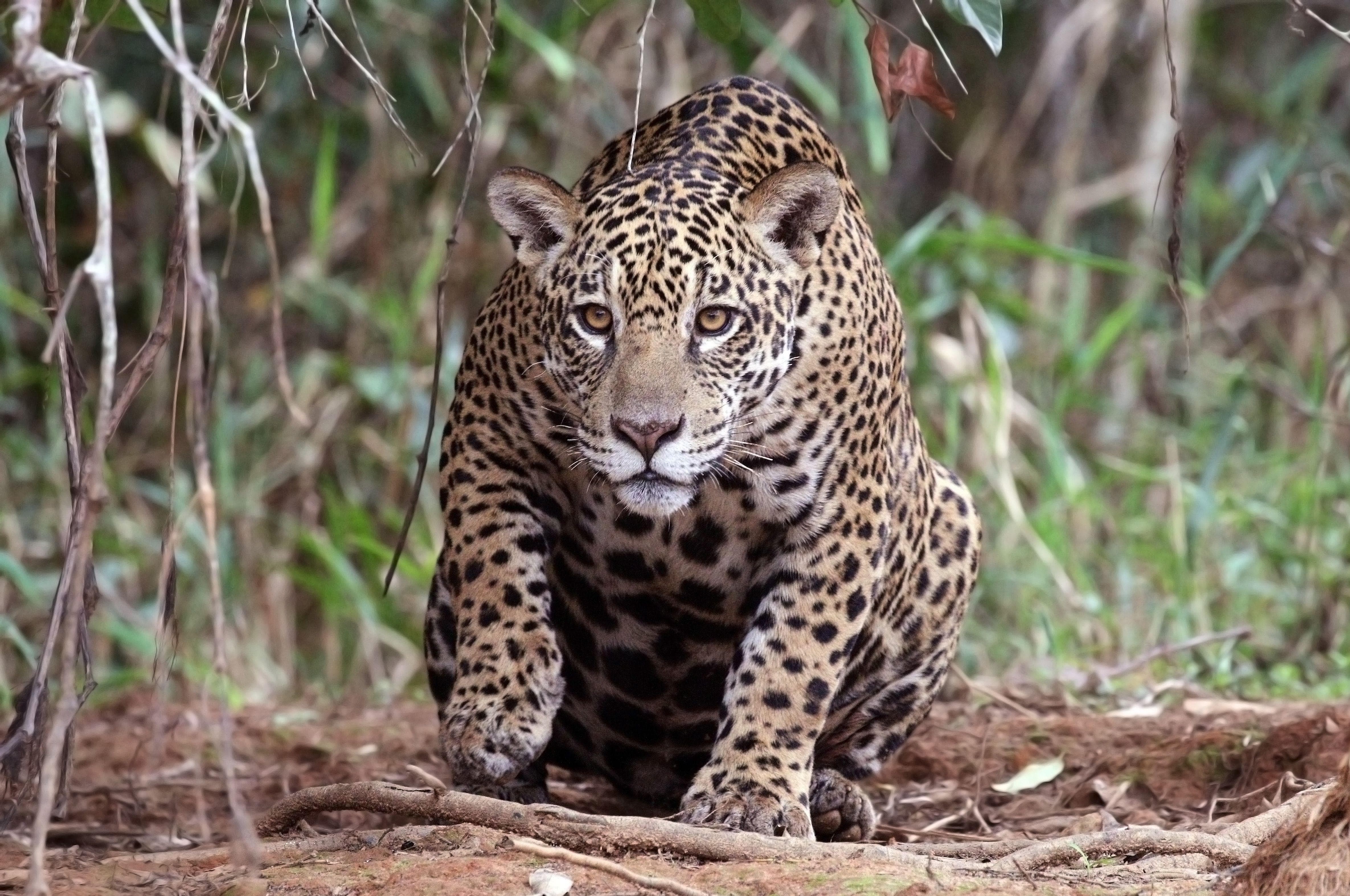
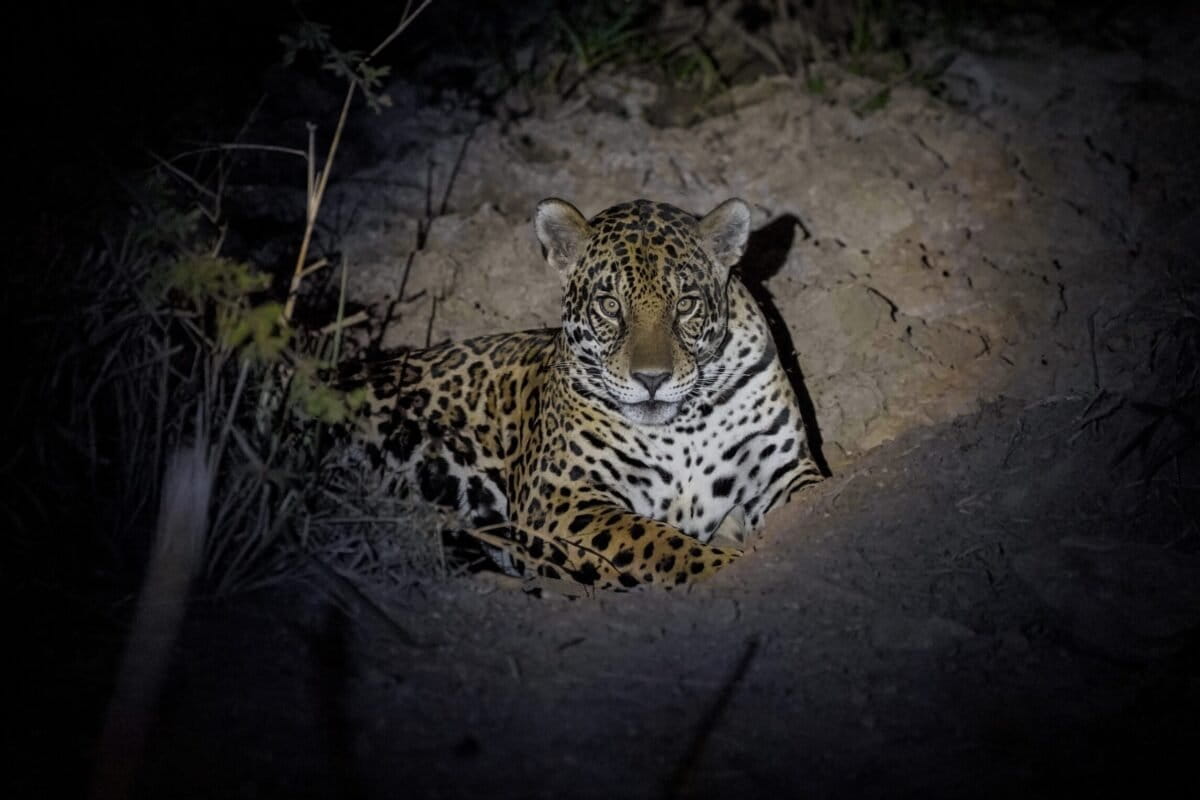
A year ago, deep in the heart of the Pantanal, the world’s largest tropical wetland, the lifeless body of Gaia, a jaguar known and loved by conservationists, was found charred by fire. Gaia had been monitored for years by Onçafari (a nonprofit founded by co-author Mario Haberfeld, which works to protect jaguars in the region through ecotourism, scientific research, and reintroductions).
Gaia was an emblem of resilience and wild beauty in a biome renowned for its biodiversity. Her tragic death, burned alive by uncontrollable flames, was more than a symbolic loss: it came as an alert, embedded with symbolism and undeniable data about the unfolding climate catastrophe.
The Pantanal, a UNESCO Biosphere Reserve and one of the most ecologically productive regions on Earth, covers more than 140,000 square kilometers (54,000 square miles) across Brazil, Bolivia and Paraguay. It is home to thousands of species, many threatened with extinction, and it provides critical ecosystem services like water filtration, carbon storage and climate regulation. But over the last five years, it has become a frontline of the climate crisis.

In 2020, fires consumed nearly 30% of the biome, directly killing 17 million wild vertebrates and emitting more carbon than Belgium that same year. In 2024, despite early warnings and past tragedies, the Pantanal burned again — this time during record-breaking temperatures and amid extreme drought — with more than 5,000 fires registered in the first five months of the year alone. The frequency, scale and intensity of these fires are no longer anomalies. They are symptoms of a system in collapse.
Wetlands like the Pantanal are not passive landscapes; they are active regulators of Earth’s climate. As carbon sinks, they store more carbon per hectare than forests. They buffer against floods, recharge aquifers and provide refuge during heat waves. Freshwater wetlands, which include floodplains, marshes, swamps and peatlands, occupy just 6% of Earth’s land surface, yet they store the majority of the planet’s soil carbon. Peatlands alone, which make up about half of all wetlands, store an estimated 450 billion to 650 billion metric tons, equivalent to 31 to 45 times global annual greenhouse gas emissions.
Unlike other ecosystems, these wetlands can store carbon for millennia, buried in waterlogged soils where decomposition is minimal. Yet these carbon vaults are being systematically destroyed.
Wetlands are disappearing three times faster than forests, with 35% lost between 1970 and 2015. When drained or burned, they release enormous amounts of greenhouse gases. Degraded peatlands, which cover just 0.4% of global land area, contribute around 4% of annual human-made greenhouse gas emissions, and wildfires in degraded peatlands can double those emissions. If current trends continue, wetland degradation could consume up to 41% of the emissions budget required to keep global heating below 2° Celsius (3.6° Fahrenheit).
Yet, the role of wetlands in climate stability remains deeply undervalued. While forests have rightly captured the imagination of climate policy and philanthropy, wetlands — especially tropical ones — remain overlooked, underfunded and unprotected.
As Brazil prepares to host the annual United Nations climate summit, the Conference of the Parties (COP30) in Belém, it is important to highlight that wetland-specific solutions are still absent from most countries’ emissions reduction pledges (or Nationally Determined Contributions, NDCs) the agreement requires. Freshwater ecosystems also rarely feature in high-level negotiations, including in the “Blue Zone,” the official U.N.-managed area at climate COPs where government representatives, negotiators and accredited observers gather to make decisions and commitments.
The fact is that wetlands store a disproportionately large amount of Earth’s terrestrial carbon, holding an estimated 30-35% of the global total, despite covering just 6-9% of the land surface. Alongside this irreplaceable function, approximately 40% of all terrestrial plant and animal species rely on wetlands for their survival.
Yet, there is still no clear international framework or financing mechanism that centers wetlands in climate mitigation and adaptation. No official events at Blue Zones. There is no thematic day at climate COPs to honor them. Nor is there real urgency to protect these ecosystems before they cross irreversible thresholds.
We failed Gaia, but there is still time to protect what remains of her home, to restore what has been damaged, and to come together around a shared vision for wetlands that honors life, rather than mourning loss.
We must recognize the unique, irreplaceable role that wetlands play in our global environmental security. We must place them at the heart of the climate agenda, recognizing their vital role in cooling a fevered planet. In doing so, we not only defend these precious ecosystems; we have a critical chance to redefine the future and honor Gaia’s death.
This article by Mario Haberfeld, Steve Trent was first published by Mongabay.com on 27 August 2025. Lead Image: Another view of the jaguar nicknamed Gaia, who died when her Pantanal habitat burned in 2024. Image courtesy of Ricardo Martins / Caiman Ecological Refuge.
Help to protect wildlife
Help to protect wildlife by donating as little as $5 – it only takes a minute!
Our conservation partners spend at least 90 percent of the money raised on actual fieldwork rather than administration and fundraising.




Leave a Reply