Australia’s Top End beaches are off limits for swimming. And for a good reason. If a Saltwater crocodile won’t get you, a Box jellyfish probably will. As a result, in contrast to the rest of Australian coastline, Northern Territory beaches are often virtually empty. And what happens if you take people away from the beach? Wildlife comes back.
,Beach stone curlewThe beaches of Casuarina Coastal Reserve at Darwin’s Lee Point are teaming with wildlife. The first inhabitants that catch the eye are Black kites. There are dozens of them: in the air, on the trees fringing the beach and even on the beach itself – looking for tasty morsels washed up by the tide.
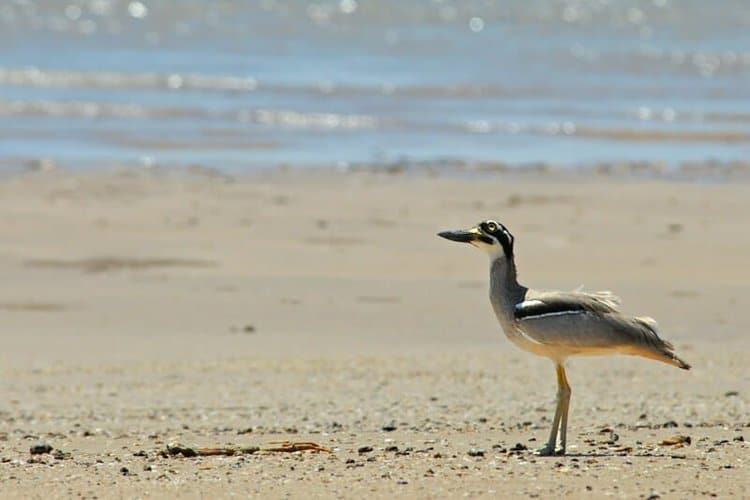
Such high density of predators makes other beach residents a little nervous. The Beach stone curlew keeps a wary eye on the kites as it forages on the beach. It is an uncommon species across most of its range and it relies on undisturbed open beaches for habitat. It is the only member of the stone curlew family that is not strictly nocturnal.
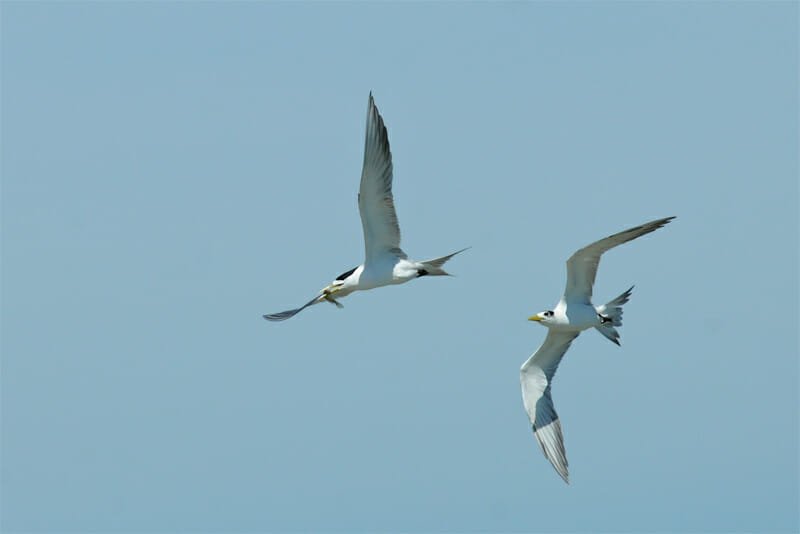
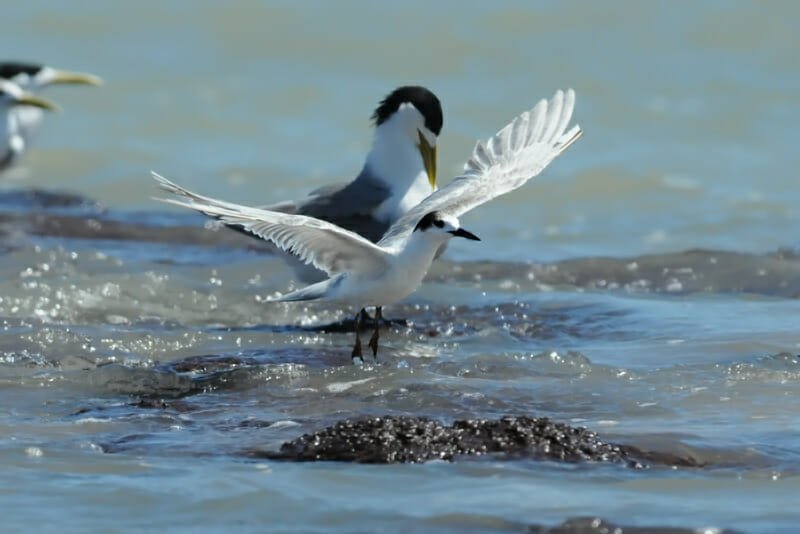
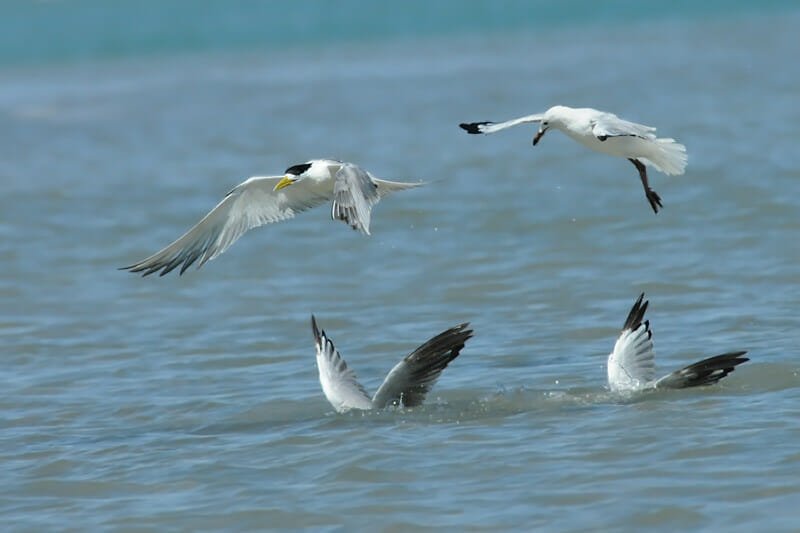
Some of the birds however, are more worried about other members of their own species than about the kites. Lee Point is home to a breeding colony of Great crested terns. While communal living provides the benefit of safety in numbers it also drives the competition for food and mates. It is not just catching the fish that makes a successful hunt, it is also being able to swallow it mid-air before being robbed by others.
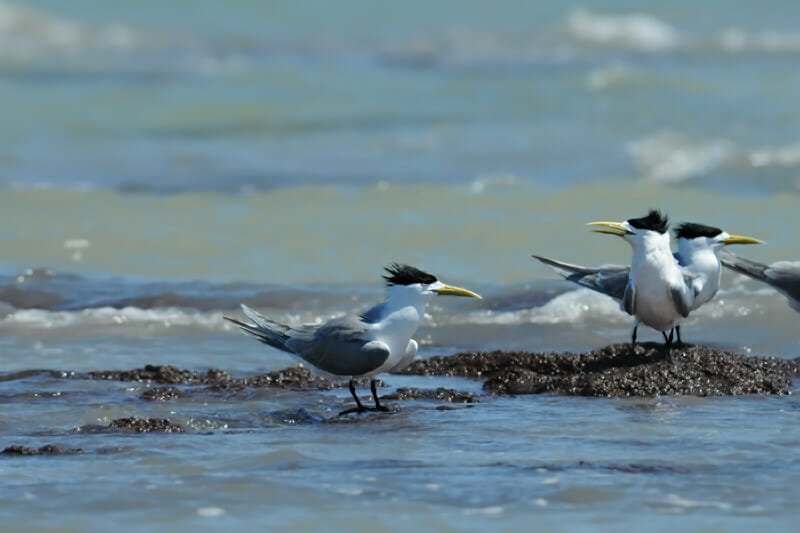

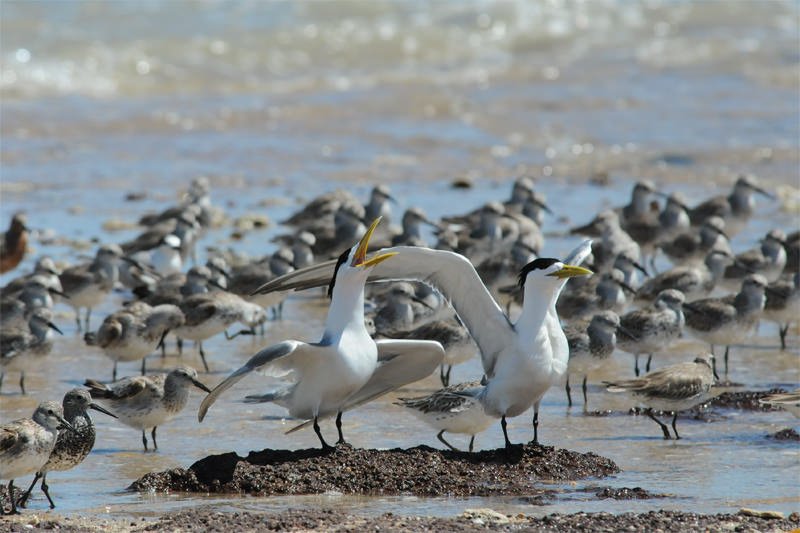
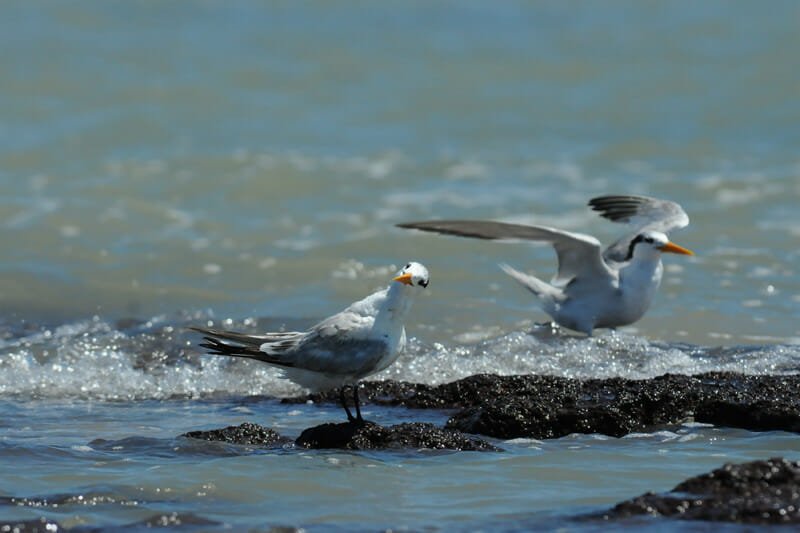
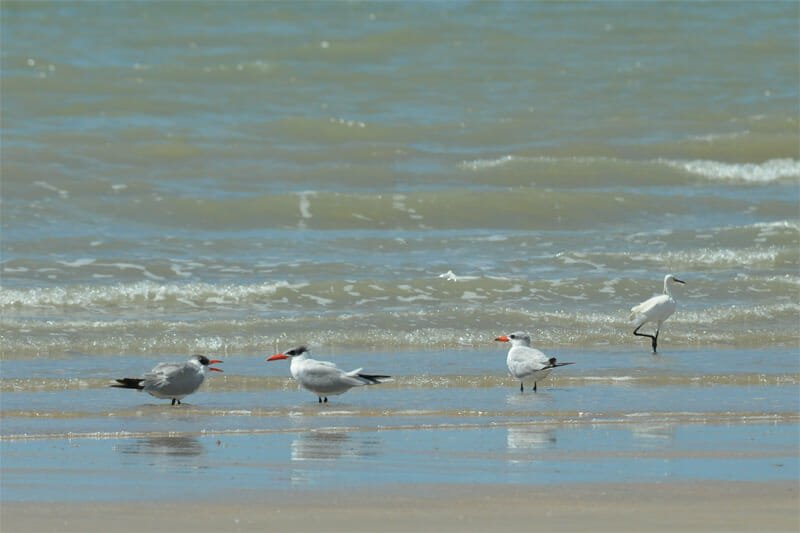
Among the Great crested terns there are a few Caspian terns, and an occasional Little tern, as well as a fair number of Silver gulls.
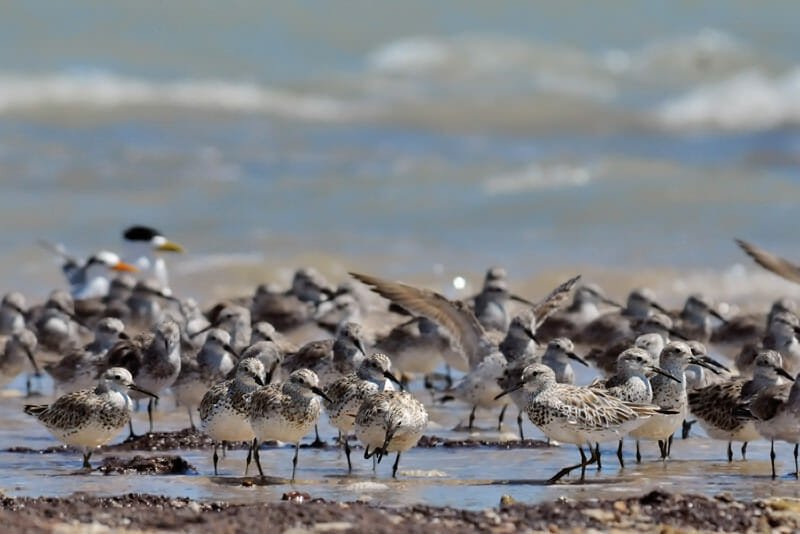
As the day goes on more beach-side residents arrive. A flock of Great knots swoops in and settles on the rocks exposed by low tide. This species is a winter visitor to Australia that will soon return to its breeding grounds in Siberian tundra. A few red blobs in the flock on closer inspection turn out to be Red knots.
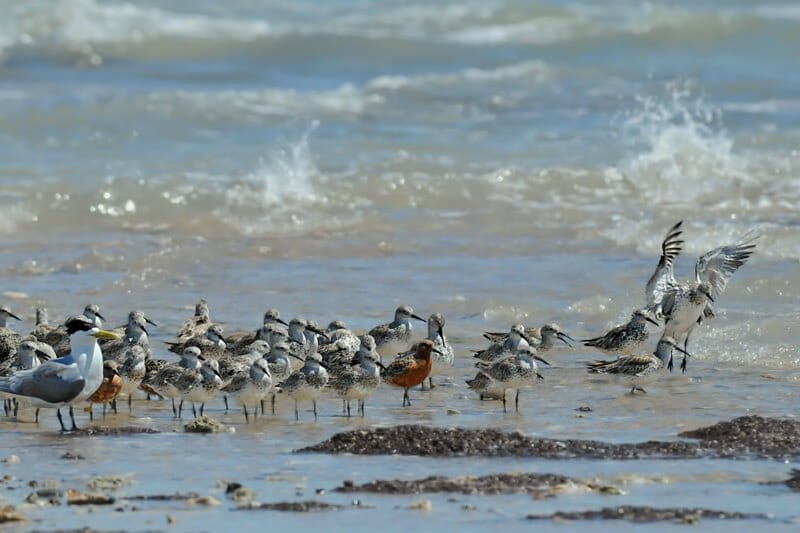
More species come and go throughout the day: Reef egret, Intermediate egret, Whistling kite, little Solder crabs. It is refreshing to see such species diversity on the beach in contrast to the usual Homo sapience homogeneity.

Margarita Steinhardt
I am a wildlife ecologist by training but more of a naturalist by inclination. I have been photographing wildlife for a number of years, throughout my travels in Thailand, India, Africa, and Russia, as well as my life in Australia. What drives me is the excitement of a new destination and the new species to be discovered and photographed.


Leave a Reply